Chess for 3 year olds
Can a 3 year old learn chess? Some can learn the names of the pieces and how two or three of them move. Very few are ready for a whole game, and that's fine. At three, chess is a toy and a game of taking turns with you. Here's what works, with a picture for each idea.
Is my child ready?
Try a few minutes if your child:
- can take turns and wait while you have yours,
- enjoys sorting and matching, like shapes, colours or animals,
- can sit with you for five minutes on something they like.
If not, put the set away for a few months. Nothing is lost by waiting: children who start at 5 or 6 learn the rules quickly.
Step 1: meet the pieces
Start with names and looks, not moves. Each piece has something to spot:
 | King | the tallest, with a cross on top |
 | Queen | a crown with little points |
 | Rook | a castle tower |
 | Bishop | a pointy hat with a slit |
 | Knight | a horse |
 | Pawn | the smallest, and there are lots of them |
Little game: the feely bag. Put a few pieces in a bag or a sock. Your child feels one without looking and guesses its name, then pulls it out to see. The horse and the tall king are the easiest to start with.
Little game: sort them out. Tip the pieces on the table and make families: all the pawns in a row, the two horses together, the two towers together. Then sort by colour.
Step 2: the rook goes straight, like a train
The rook is the easiest piece to move: it goes in a straight line, along the rails, as far as it likes. It can go forwards, backwards or to the side, but never on the slant.
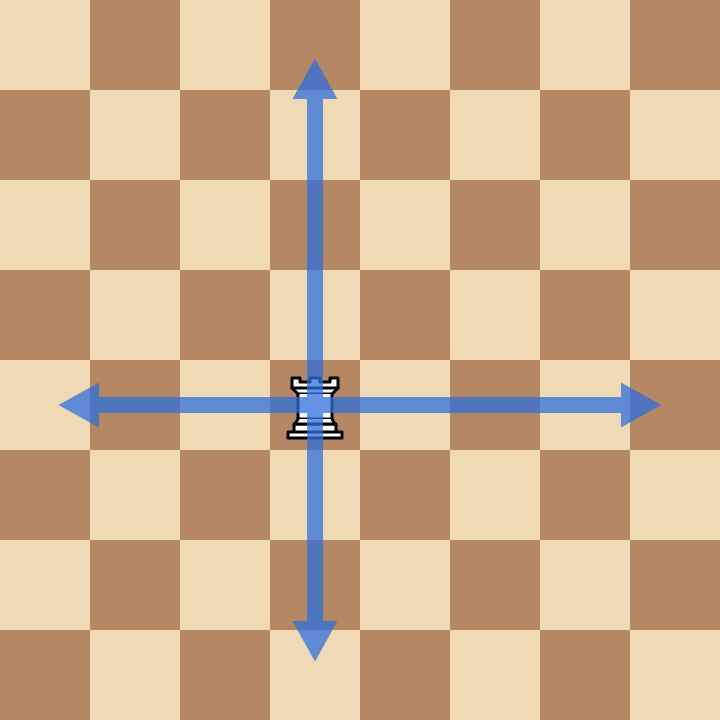
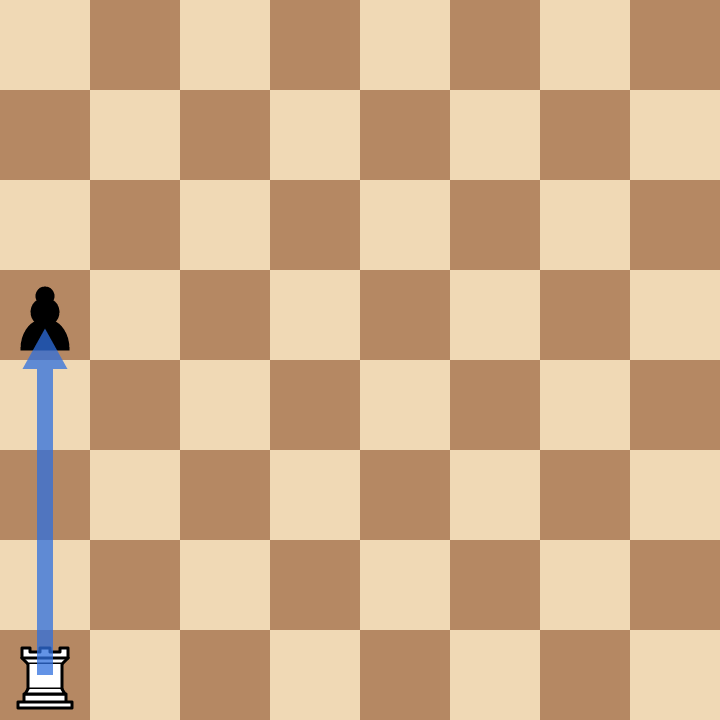
Little game: catch the pawn. Put your child's rook on the board and one of your pawns on its line. Your child slides the rook along and takes it. Then put the pawn somewhere new. When that's easy, try a pawn that needs two moves: up, then across.
Step 3: the king takes one step
The king is important but slow. He takes one step at a time, any way he likes: forwards, backwards, to the side or on the slant.
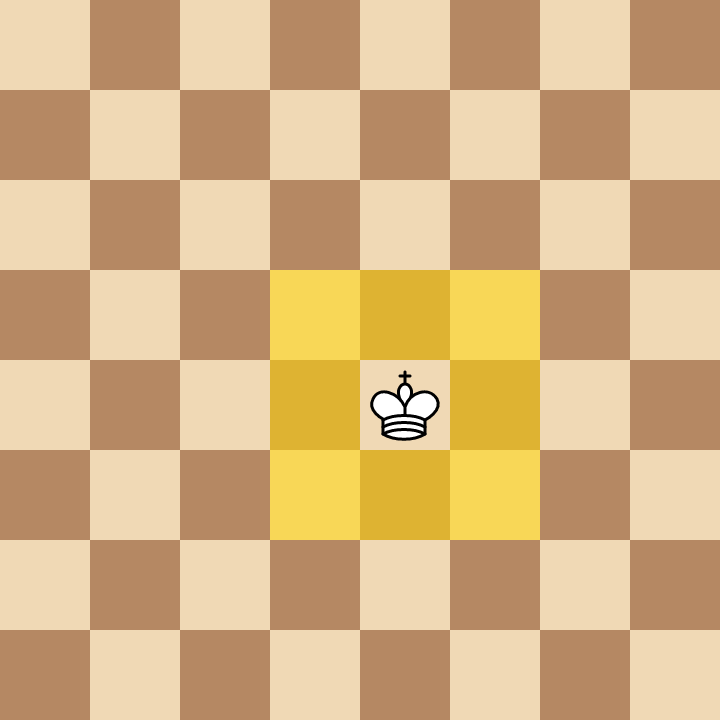
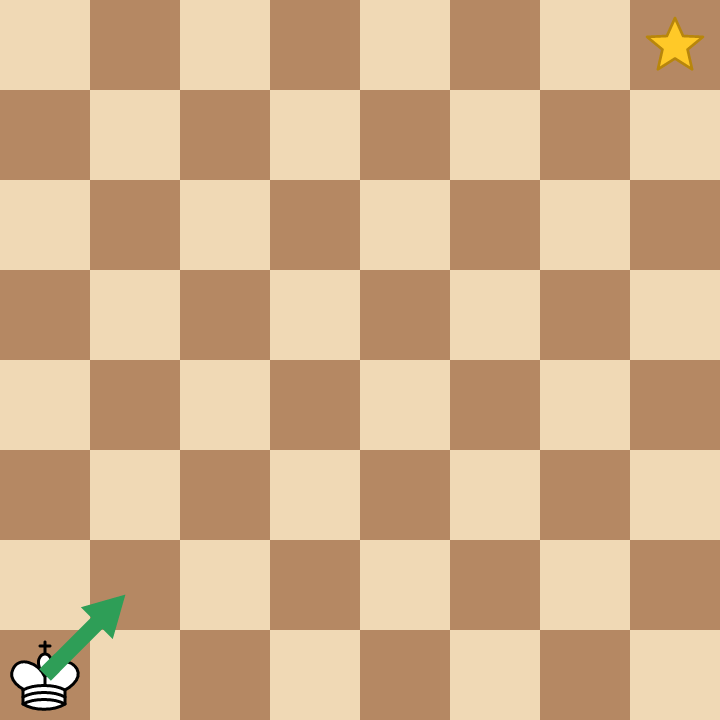
Little game: the king's walk. Put the king in one corner and a coin or a sticker in the far corner. Count the steps together as he walks there, one square at a time. Seven steps if he goes on the slant!
Step 4: the pawn walks forward
The pawn only walks forward, one square at a time, and never goes back. If it reaches the far side, it turns into a queen, the strongest piece of all. Children love that.
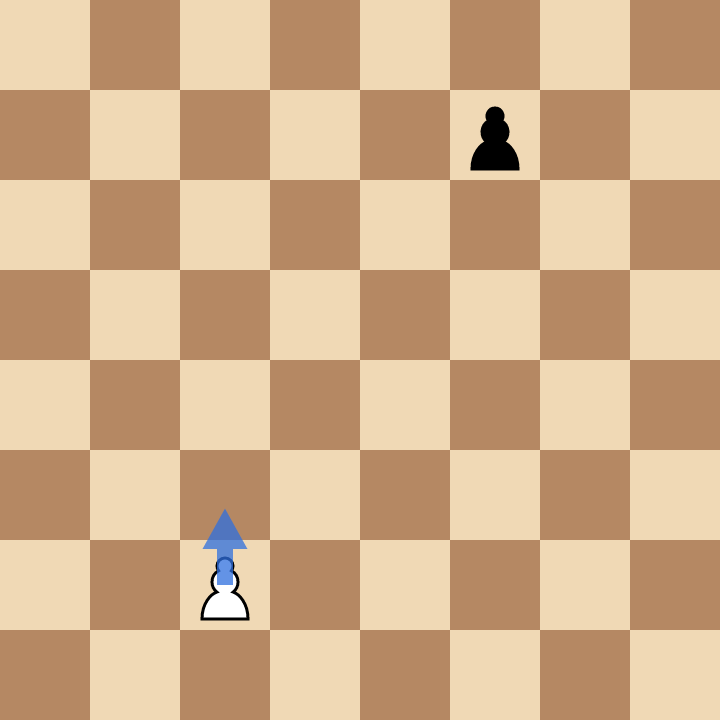
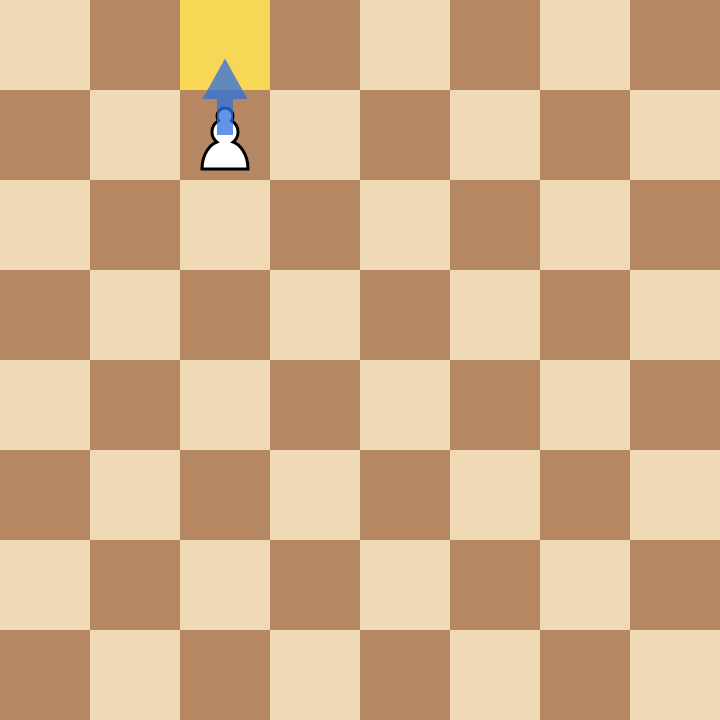
Little game: the one-pawn race. You each have one pawn, in different columns so they never meet. Take turns stepping forward one square. The first to reach the far side swaps their pawn for a queen. (In a real game a pawn may take two steps on its first move; leave that for later.)
What to leave until later
The bishop, the queen's moves and the knight (the hardest of all), how pawns capture, check and checkmate, and whole games can all wait. When your child knows the names and can move the rook, king and pawn, they've done brilliantly for three. Around 4 or 5, add the other pieces one at a time: our guide to chess for 4 and 5 year olds picks up from here.
Tips from the kitchen table
- Two to five minutes is a good go. Stop while it's still fun.
- Real pieces, not a screen. Holding a piece helps a young child remember it. Our printable chess board has pieces to cut out and colour.
- Check the set's age label, and stay with your child while they play.
- Let them win the little games, and cheer the good thinking: "You found the straight line!"
- Keep the board facing them the same way each time, so the pieces look familiar.
Questions parents ask
Can a 3 year old learn chess?
Some can learn the names of the pieces and how two or three of them move, as a game with a grown-up. Very few 3 year olds are ready for a whole game, and that's fine: most children play their first whole game somewhere between 5 and 7.
Is 3 too young for chess?
Not for playing with the pieces. Naming them, sorting them and walking a king to a star are all good fun at three. Keep the rules for later, and stop the moment it stops being fun.
What kind of chess set is best for a toddler?
Big, chunky pieces that are easy to hold and hard to lose. Check the box: many chess sets say they aren't for children under 3 because of small parts, so pick one that's right for your child's age and stay with them while they play.
Can my 3 year old use My Chess Family?
The app is built for children from 4. At three, a real board and a grown-up are better than a screen. Our printable chess board has a board, a set-up mat and pieces to cut out and colour, which is a good start.
How long should we play for?
Two to five minutes is plenty at three. Little and often beats a long go, and finishing while your child still wants more makes them ask for it again.
My Chess Family in one minute
- A free chess app for children from age 4, teenagers too, and their families, made in the UK
- No chat: children can't type to anyone, only send eight friendly emotes
- No strangers: friends join only by a one-time code from a grown-up
- No ads, no purchases, no links out of the app
- A grown-up sees every lesson, puzzle and game
- Built around the UK Children's Code
- Works in a web browser, best on an iPad; families apply and we approve each one
Other ages: 4 and 5 year olds · 6 and 7 year olds · 8 to 10 year olds. Or start with how to teach your child chess, step by step.