Printable chess puzzles for kids
36 chess puzzles to print, in three levels, with the answers at the back and a sentence on why each one works. Good for a rainy afternoon, a train journey or the chess club.
Download the 36 puzzles (PDF) All the worksheets Puzzle of the day
Free to print and photocopy for teaching, at home, in class or at a club. No sign-up.
What’s inside
A cover page with three tips for finding the answer, then six puzzles on each page, then the answers. Each page is also a worksheet on its own:
Level 1: first puzzles (ages 6 to 9)
Take a piece nobody guards, then checkmate in one move.
Level 2: first tricks (ages 7 to 10)
Forks (one move attacks two pieces) and checkmate on the back row.
Level 3: harder (ages 8 to 11)
Checkmate in one with more pieces about, then checkmate in two moves.
Try one from each level
These are the first puzzle of each level, numbered as in the PDF. Tap "Show the answer" to check.
Level 1: first puzzles
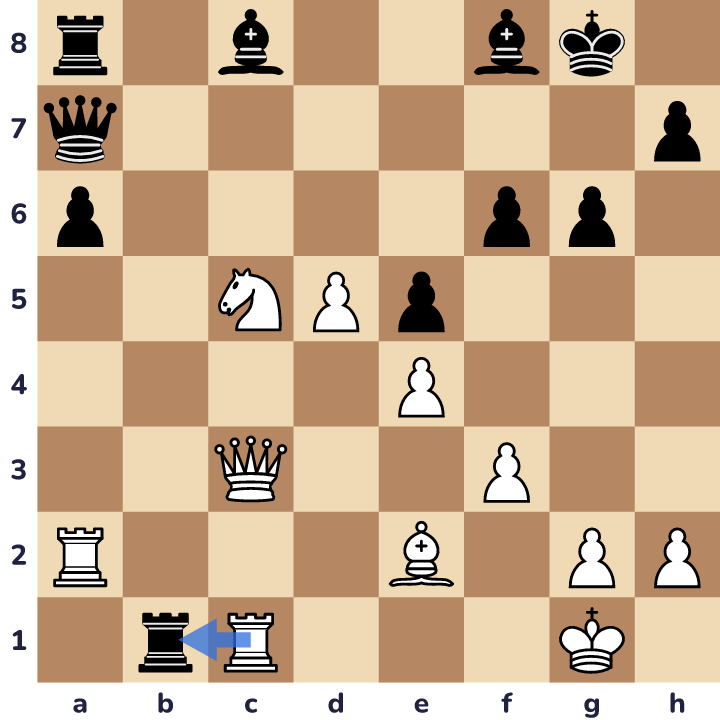
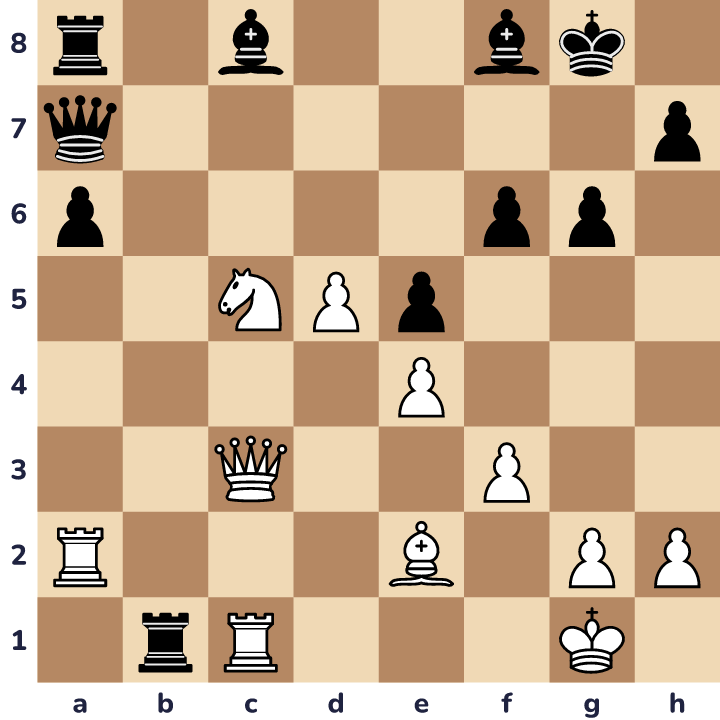
A piece is left unguarded. Find the move that takes it, and write it under the board.
1. White to move. Take the free piece!
Show the answer
Rxb1
Rxb1 takes the rook, and nothing can take back.
Level 2: first tricks
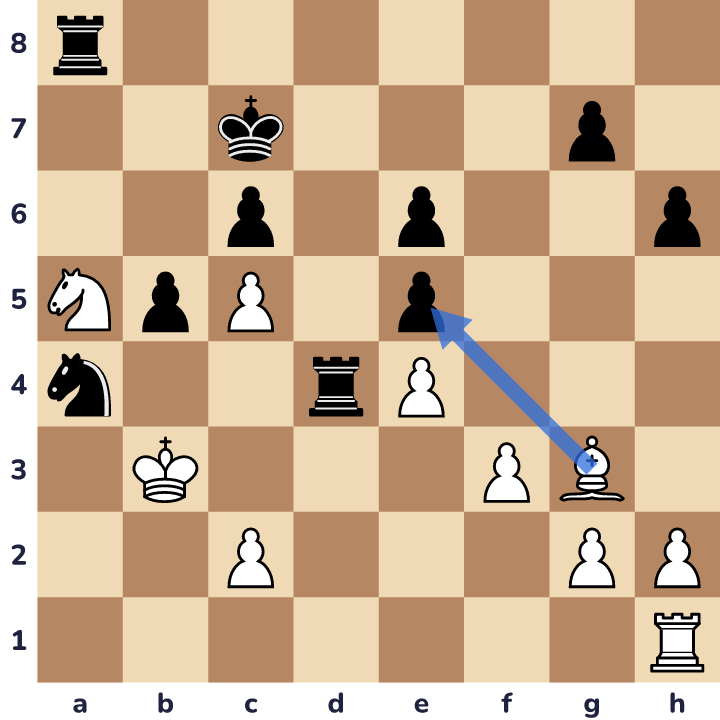
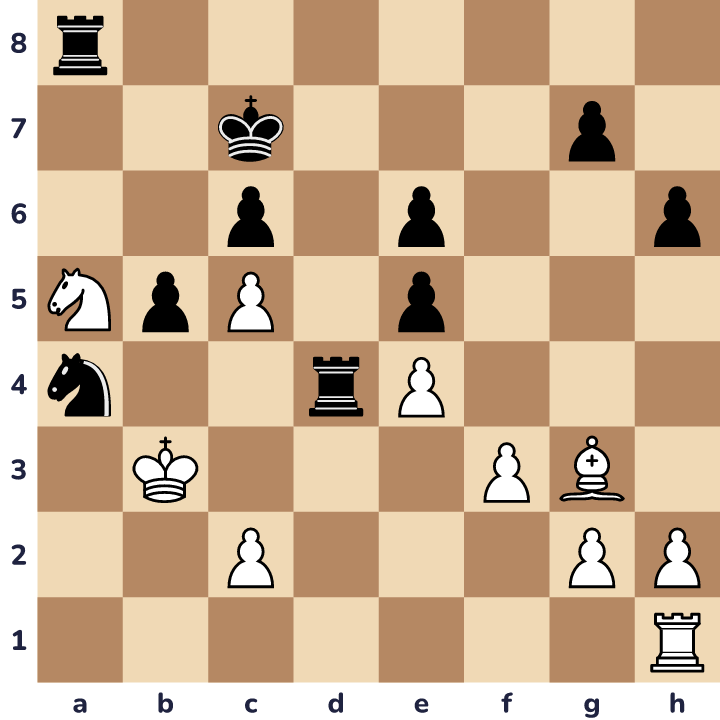
Find the move that attacks two pieces at once. Write it under the board.
13. White to move. Find the fork!
Show the answer
Bxe5+
Bxe5+ attacks the king and the rook. After Kd7, Bxd4 takes the rook.
Level 3: harder
Find the move that gives checkmate. Write it under the board.
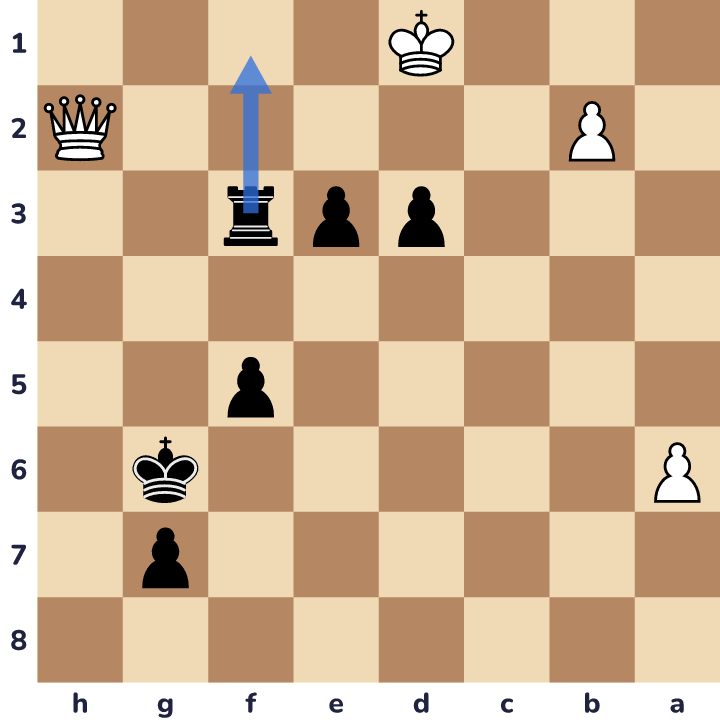
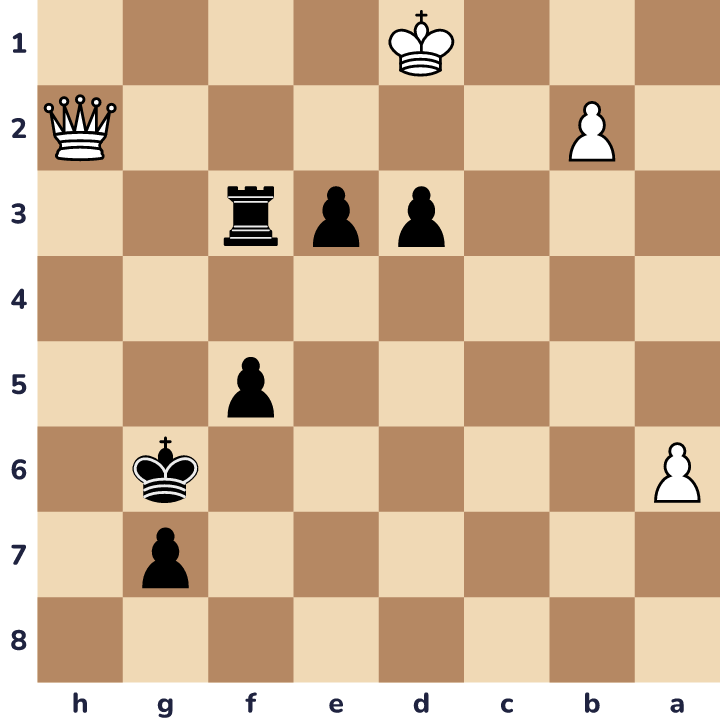
25. Black to move. Find the checkmate!
Show the answer
Rf1#
How to find the answer
Most beginner puzzles fall to the same three questions, in this order:
- Every check. For each check, can the king step away, can something block, or can the checking piece be taken? If not, it’s checkmate. (Checkmate in one.)
- Every capture. Is the piece guarded? If nothing can take back, it’s free. (Free or guarded?)
- Every attack on two things. A knight or queen that hits two pieces at once wins one of them. (What is a fork?)
Want a new puzzle every day? Try the puzzle of the day, and in December the chess advent calendar. When a child finishes the pack, print them a chess puzzle star certificate.
Questions
What age are these chess puzzles for?
Level 1 suits most children from about 6 who know how the pieces move. Level 2 needs forks and the back row (there are free lessons on both), and level 3 suits children of about 8 and up who play whole games. Start at level 1 whatever the age: easy wins build confidence.
My child can’t write chess moves yet. Can they still do them?
Yes. They can draw an arrow on the board from the piece to the square instead, or show you on a real board. Writing moves is worth learning later: our notation lesson takes about ten minutes.
How do I help without giving the answer away?
Ask "Which moves give check? Which pieces can you take? What is not guarded?" Most beginner puzzles are found by looking at every check and every capture first. If they’re still stuck, point at the piece that moves, not the square.
Where do the puzzles come from? Are the answers right?
They are real positions from the Lichess puzzle database (free for anyone to use), picked for children. Each answer was worked out by code where it can be (every checkmate in one, and every first move of a checkmate in two) and checked again with the Stockfish chess engine.
Can I photocopy them for my class or club?
Yes, as many copies as you like for teaching, free. Please don’t sell them. Each level is also a single worksheet if you only want six puzzles: see the worksheets.
Puzzle positions from the Lichess puzzle database (CC0), checked with the Stockfish chess engine.
Learn with the whole family
These puzzles come from My Chess Family, a free chess app where children learn and play with their family and friends: no chat, no ads and no strangers. Why it's safe for kids.