Chess rules for kids
All the rules of chess on two pages, with a picture for each. Print it for the fridge, the classroom or the chess club, or read it here.
Download the rules sheet (PDF) Printable board and pieces How to teach your child chess Chess words for kids
Free to print and photocopy for teaching, at home, in class or at a club. No sign-up.
Setting up
White goes at the bottom with a light square in the right-hand corner: "light on the right". The rooks go in the corners, then the knights, then the bishops. The queen goes on her own colour, and the king next to her. Pawns fill the second row.
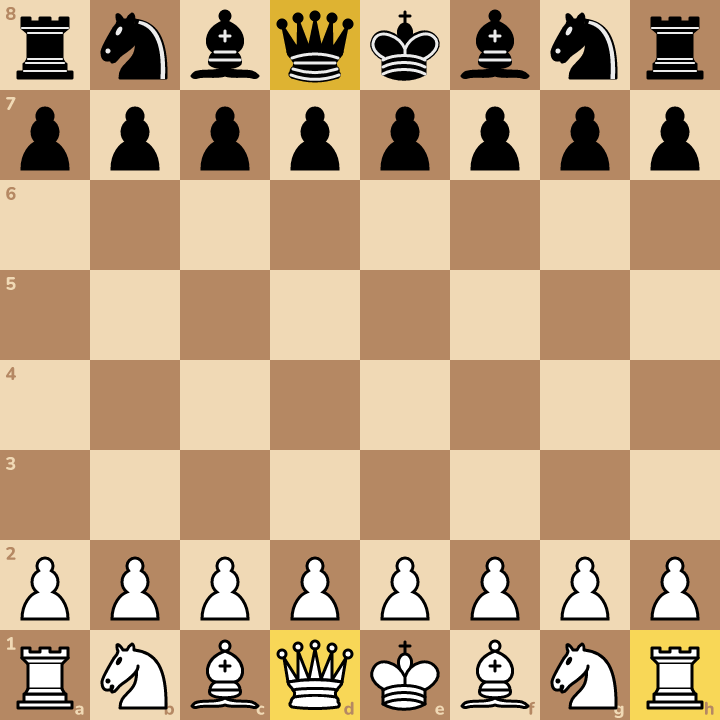
White moves first, then the players take turns. The goal is to checkmate the other king: attack it so it can't escape.
How the pieces move
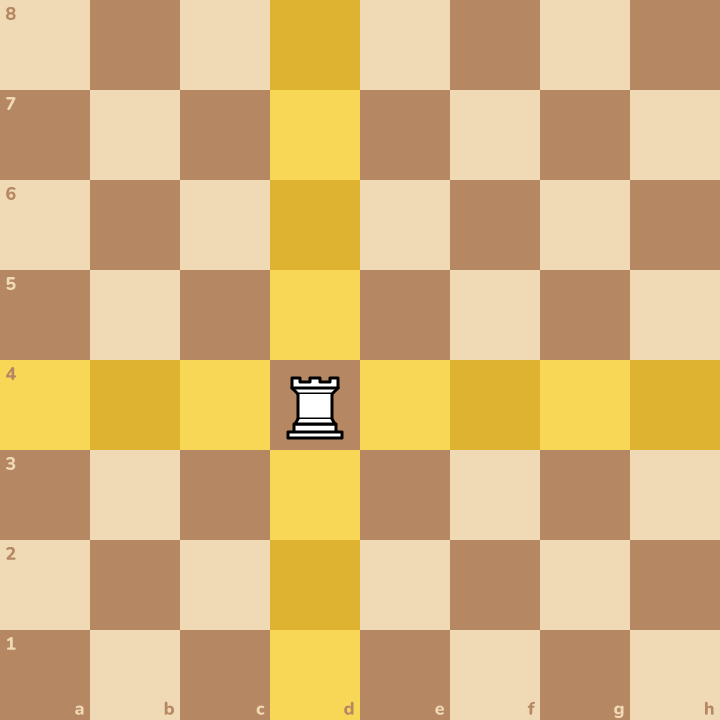
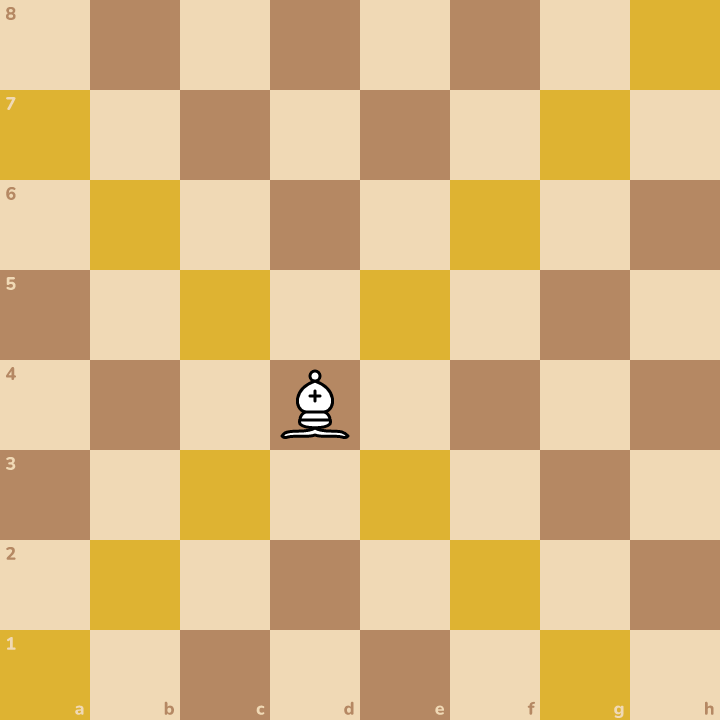
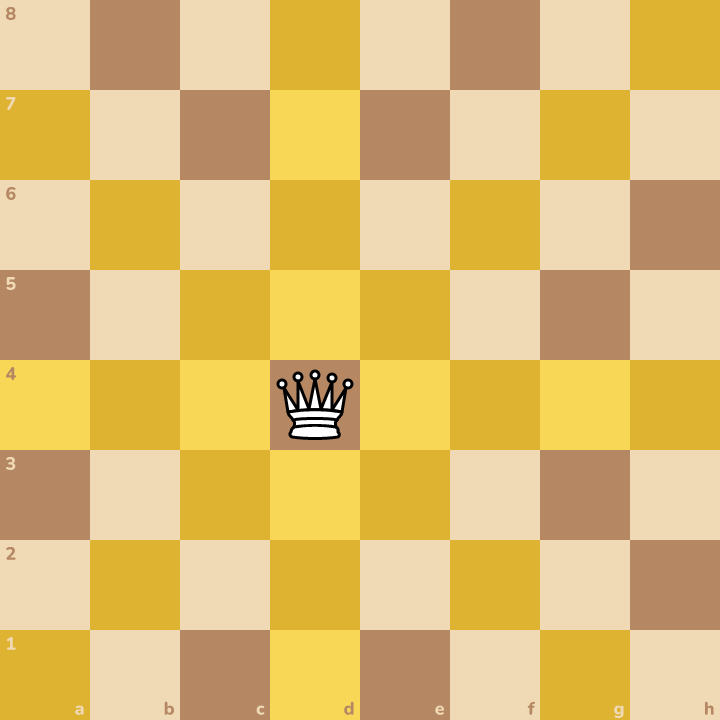
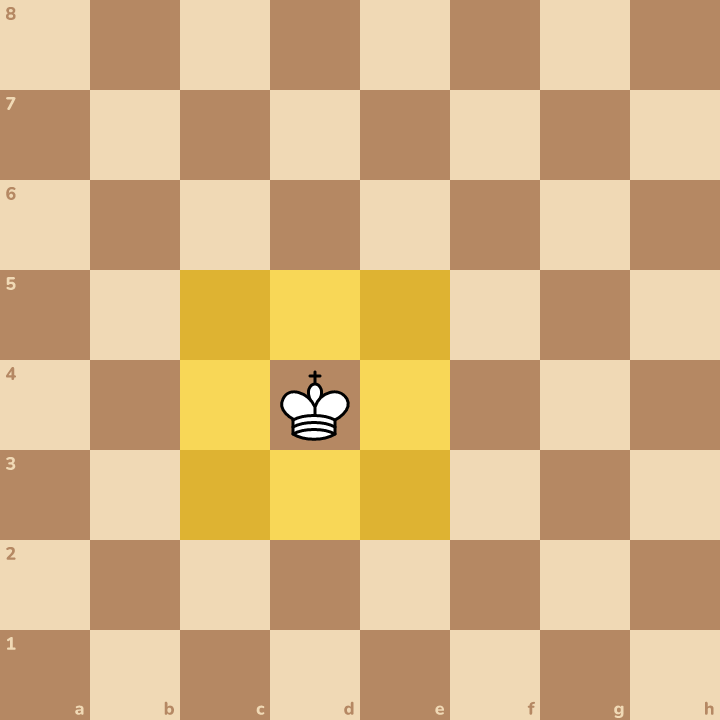
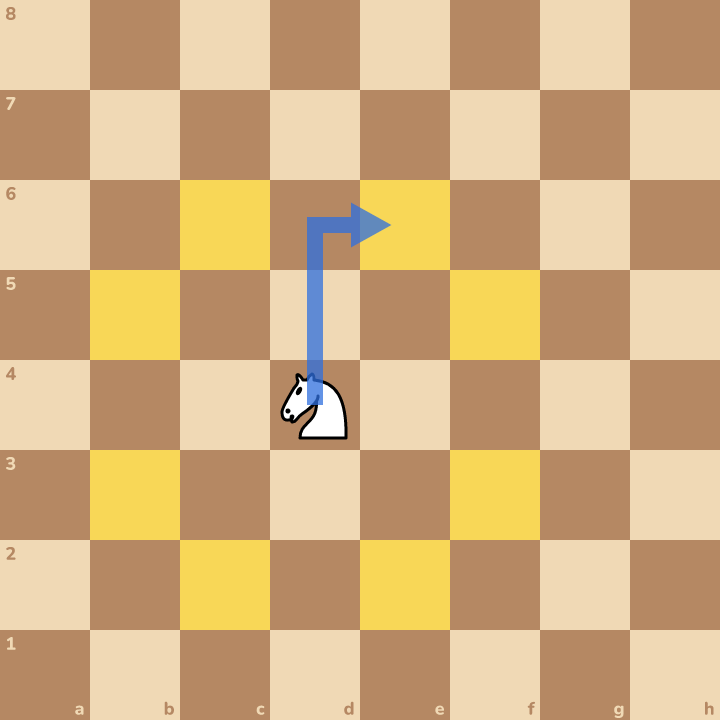
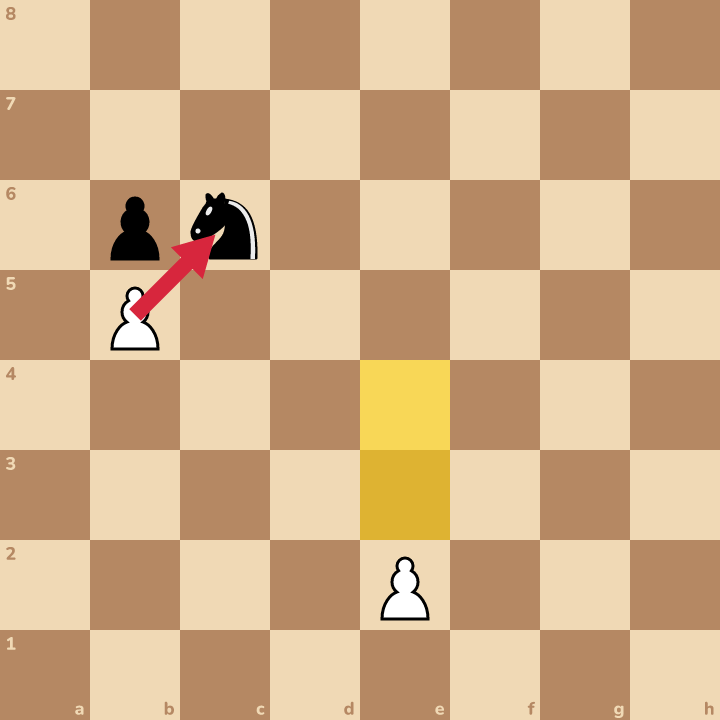
Each board shows one piece in the middle. It can move to any yellow square.
The rook
Moves in a straight line along a row or a column, as far as it likes.
The bishop
Moves along a diagonal, as far as it likes. It stays on squares of one colour all game.
The queen
Moves like a rook and a bishop together: any straight line or diagonal, as far as it likes.
The king
Moves one square in any direction. It can never move onto a square where it could be taken.
The knight
Jumps in an L: two squares one way, then one to the side. It is the only piece that can jump over others.
The pawn
Moves straight forward one square, or two on its first move. It captures one square forward on the slant. It can never move backwards.
Check, checkmate and the special moves
Capturing
A piece captures by moving onto a square with an enemy piece, which comes off the board. You never have to capture, and you can never capture your own pieces.
Check
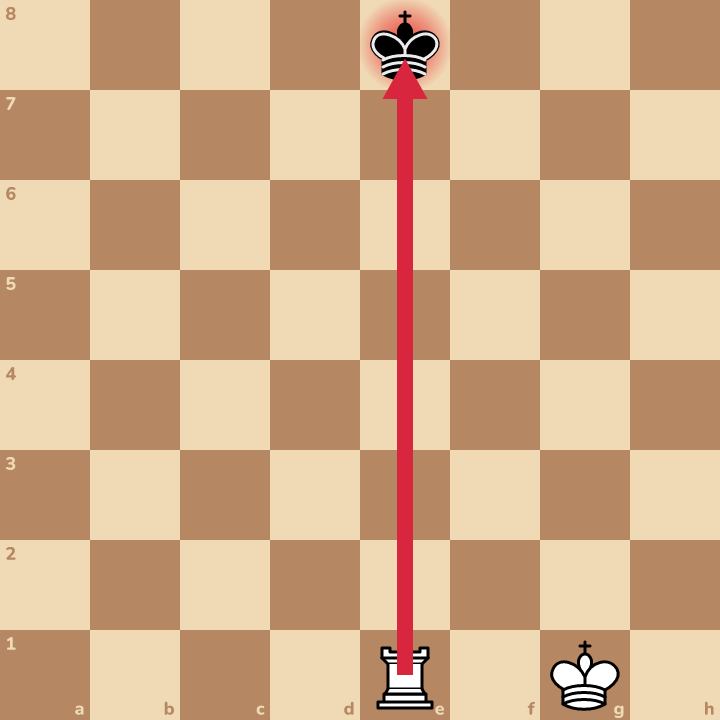
When a king is attacked, it is in check, and it must get out at once. There are three ways: move the king, block the check with a piece, or capture the piece giving check. You can never make a move that leaves your own king in check.
Checkmate
Check with no way out. The king is not captured: the game ends, and the side giving checkmate wins.
Stalemate
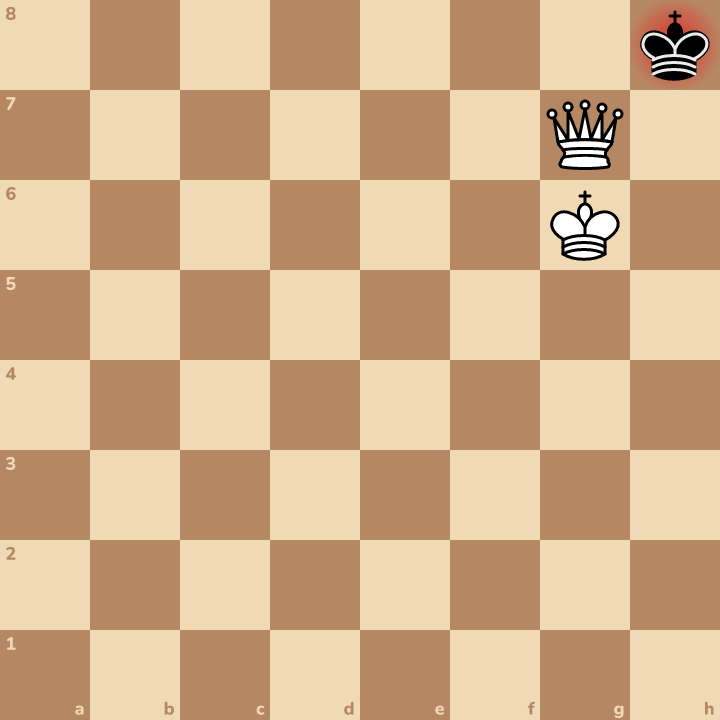
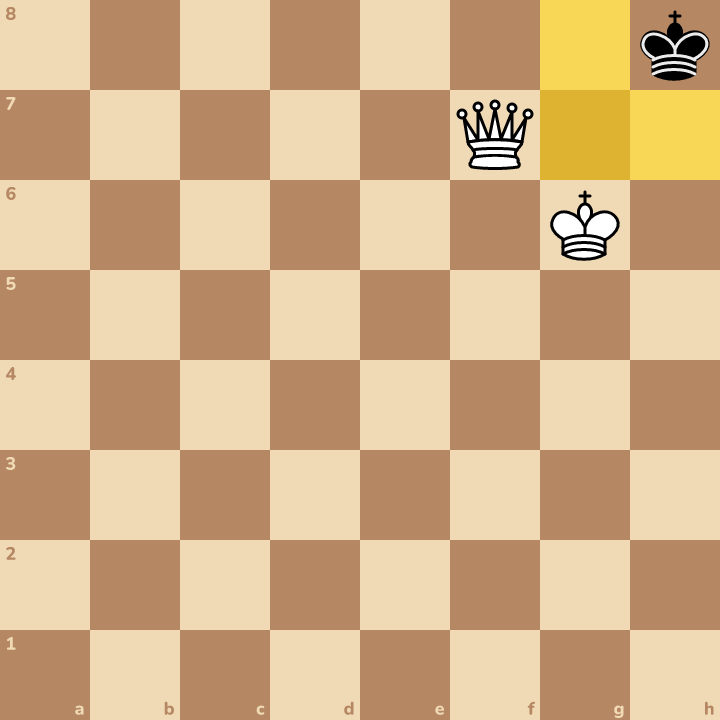
If the player to move is not in check but has no legal move, the game is a draw. Black to move here: the king isn't in check, but every square is covered.
Castling
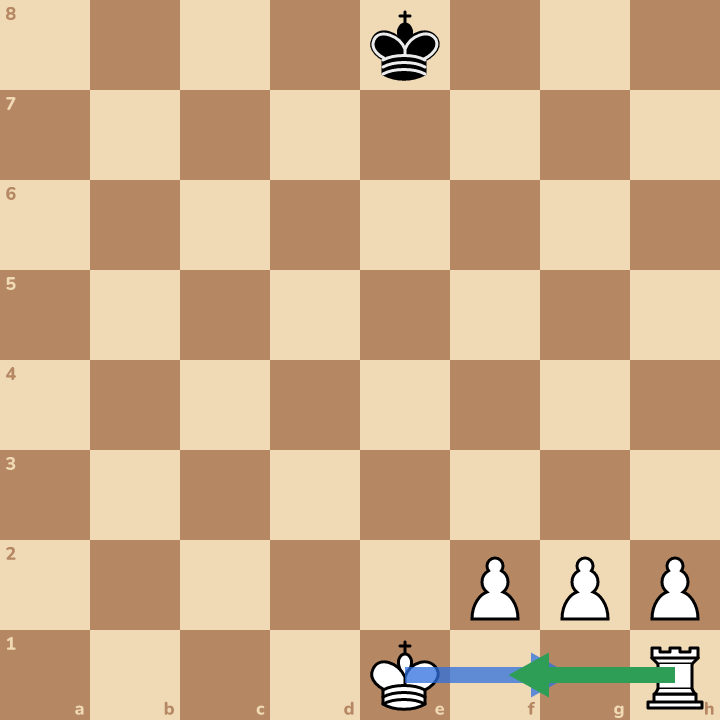
Once a game, the king moves two squares towards a rook and the rook jumps to the square on its other side. Only if neither has moved, the squares between are empty, and the king isn't in check, doesn't cross an attacked square and doesn't land on one.
Promotion
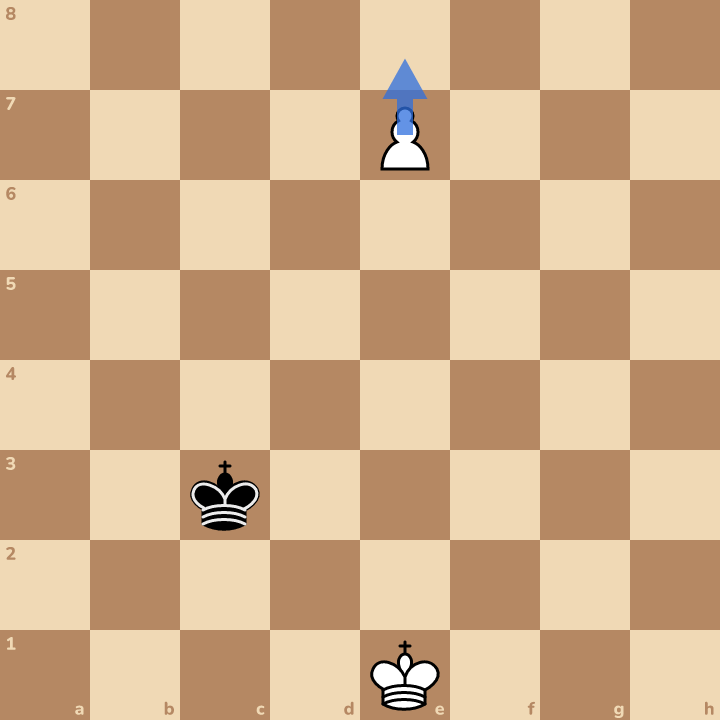
A pawn that reaches the far side becomes a queen, rook, bishop or knight, whichever its player chooses. Most choose a queen.
En passant
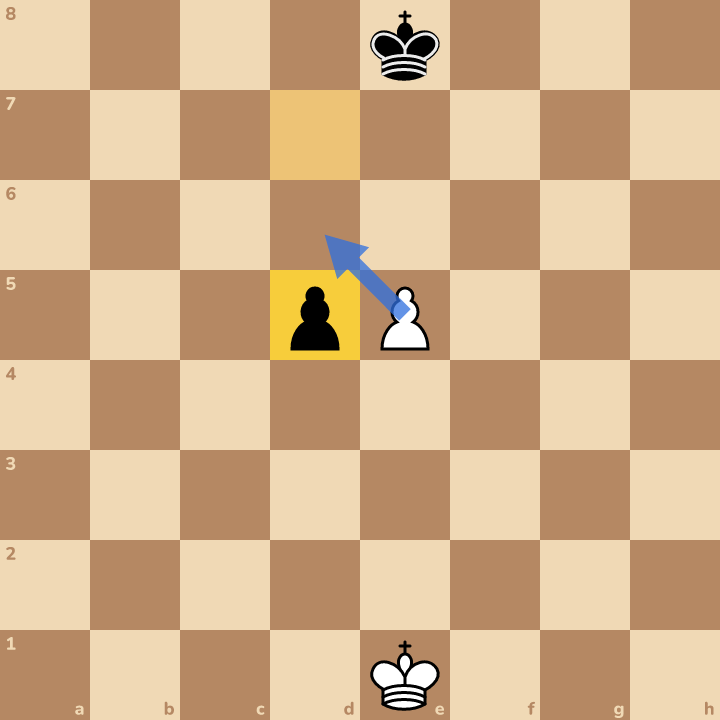
If a pawn moves two squares and lands right beside an enemy pawn, that pawn may capture it as if it had moved one square. Only on the very next move.
When a game is a draw
- Stalemate: the player to move has no legal move and is not in check.
- Not enough pieces to checkmate: for example, only the two kings are left.
- The same position three times, with the same player to move.
- Fifty moves each with no capture and no pawn move.
- Both players agree to a draw.
Learn each rule
Each rule has its own free lesson with questions: rook, bishop, queen, king, knight, pawn, check, checkmate, stalemate, castling, en passant and how a game ends. Then try the free worksheets.
Questions
Who moves first in chess?
White always moves first. Then the players take turns, one move each.
Which way round does the board go?
With a light square in the bottom right corner for each player: "light on the right". The queen starts on her own colour, so the white queen is on a light square.
Can a pawn move backwards?
No. A pawn only ever moves forward. When it reaches the far side it becomes another piece, usually a queen.
Can you capture the king?
No. The king is never taken. When it is attacked and has no way out, that is checkmate and the game is over.
Is this sheet free to print for school or a club?
Yes. Print and photocopy it as often as you like for teaching, at home, in class or at a club. No sign-up.
Learn with the whole family
This sheet comes from My Chess Family, a free chess app where children learn and play with their family and friends: no chat, no ads and no strangers. Why it's safe for kids.