How to teach your child chess
You don't need to be good at chess to teach your child. You need a board, ten minutes, and an order that adds one thing at a time. Here's the order we use, from a club chess player and parent, with a picture for each idea and a free lesson or worksheet for each step.
Want every rule on one sheet for the fridge? Print our free chess rules for kids (two A4 pages, with pictures). Stuck on a word like fork or en passant? Look it up in chess words for kids.
The eight steps
- 1The board
- 2One piece at a time
- 3Capturing and the pawn race
- 4Setting up and points
- 5Check, checkmate, stalemate
- 6The special moves
- 7Whole games
- 8Finishing the game
Before you start
- Little and often. Ten or fifteen minutes most days works better than an hour at the weekend. Stop while your child still wants more.
- One new thing at a time. Don't move on until the last step feels easy.
- Little games first. A game with only a few pieces ends in two minutes and gives a young child something to win.
- Keep the board facing your child, with the white pieces at their side, the same way each time.
1The board
The board has 64 squares, light and dark. It always sits with a light square in the bottom right corner: "light on the right". Teach three words here, because every piece moves along one of them: a row goes across, a column goes up and down, and a diagonal runs on the slant, along squares of one colour.
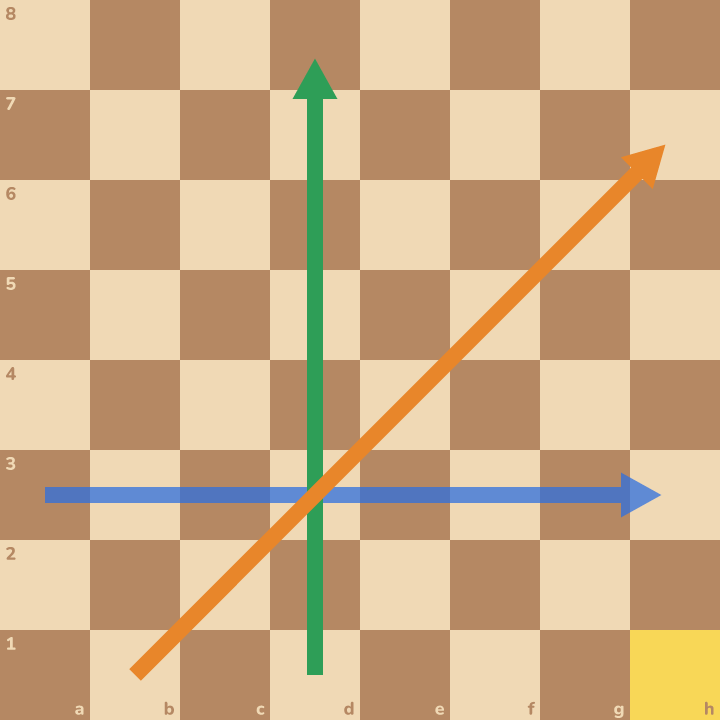
Free: the board lesson and the light or dark square worksheet.
2One piece at a time
Teach the pieces in this order, each on an empty board before the next: the rook (straight lines are easiest to see), the bishop (diagonals), the queen (both), the king (one square any way), the knight (the L-shaped jump, the hardest to learn), and the pawn last, because it moves one way and captures another.
Little game: rook hunt. Put your child's rook on the board with a few of your pawns that don't move. How many moves to capture them all? Then try it with a bishop, and later the queen.
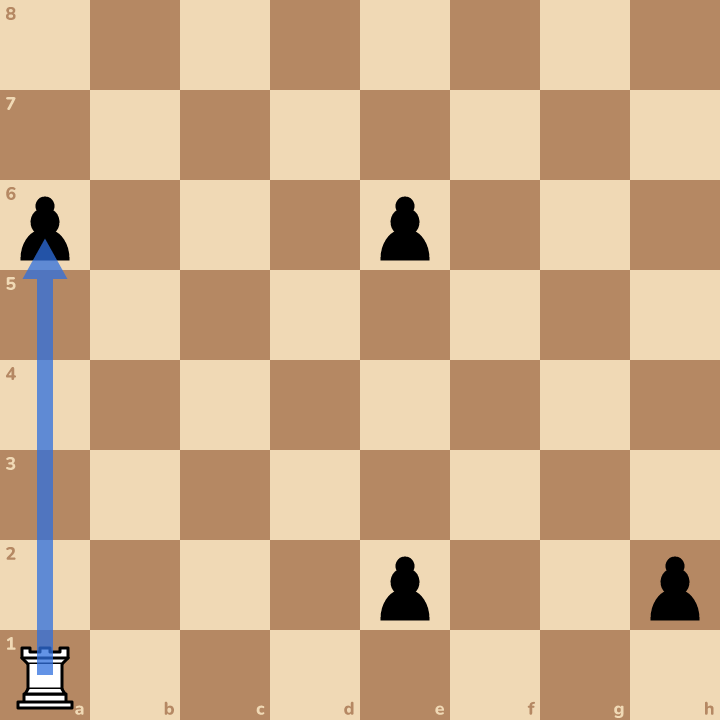
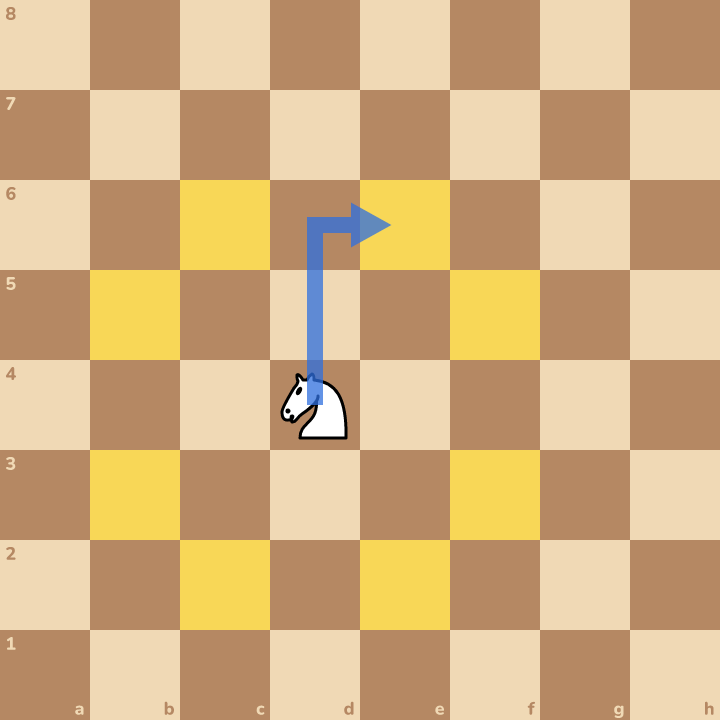
Free: rook, bishop, queen, king, knight and pawn lessons, and where can the knight go?
3Capturing and the pawn race
A piece captures by landing on an enemy piece, which comes off the board. Children love this. A pawn is the odd one out: it moves straight forward but captures one square forward on the slant.
Little game: pawn race. Each side has only its eight pawns, in their starting rows. Take turns moving one pawn. The first pawn to reach the far side wins. In a real game a pawn that gets there becomes a queen, so this little game teaches the best reward in chess.
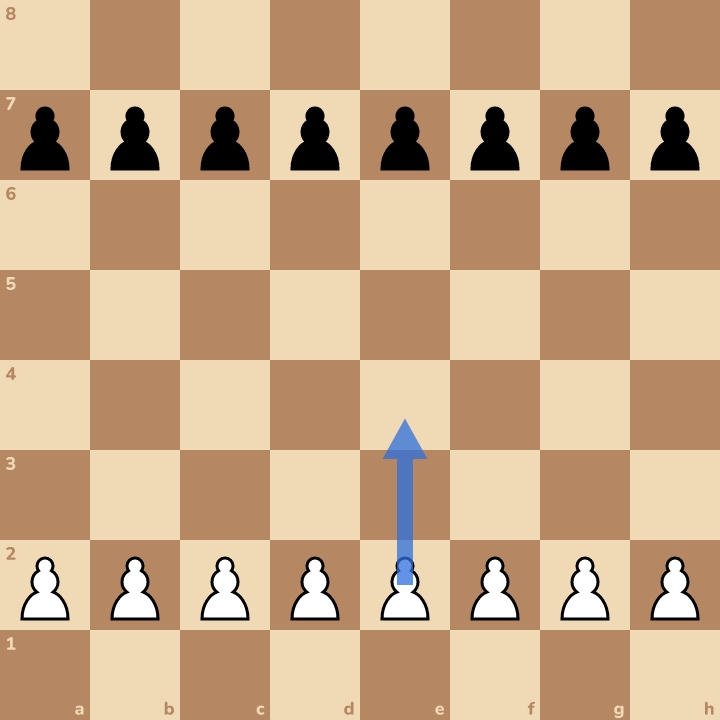
Free: how to take pieces and the pawn race.
4Setting up and points
Now set up the whole board together. Light on the right again, then the queen goes on her own colour (the white queen on a light square, the black queen on a dark one) and the king beside her.
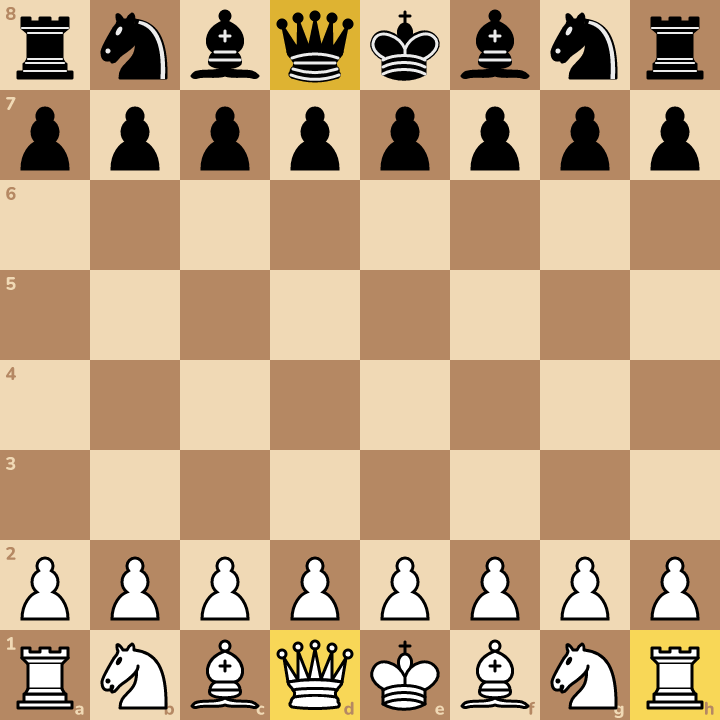
Then teach the points. They help a child decide whether a capture is a good trade: giving a rook (5) for a knight (3) loses 2.
 | Pawn | 1 |
 | Knight | 3 |
 | Bishop | 3 |
 | Rook | 5 |
 | Queen | 9 |
 | King | the game |
Free: a printable board with a set-up mat, the set up the board worksheet, what the pieces are worth and count the points.
5Check, checkmate, stalemate
Check means the king is attacked. There are three ways out: move the king, block the check, or capture the piece giving it. Checkmate is check with no way out, and it wins the game.
Teach stalemate straight after: if the player to move is not in check but has no legal move, the game is a draw. This matters more than it sounds. Children who are far ahead often hem the other king in without giving check, and throw away a won game. Before every move that takes a square from a lone king, ask: "Can their king still move?"
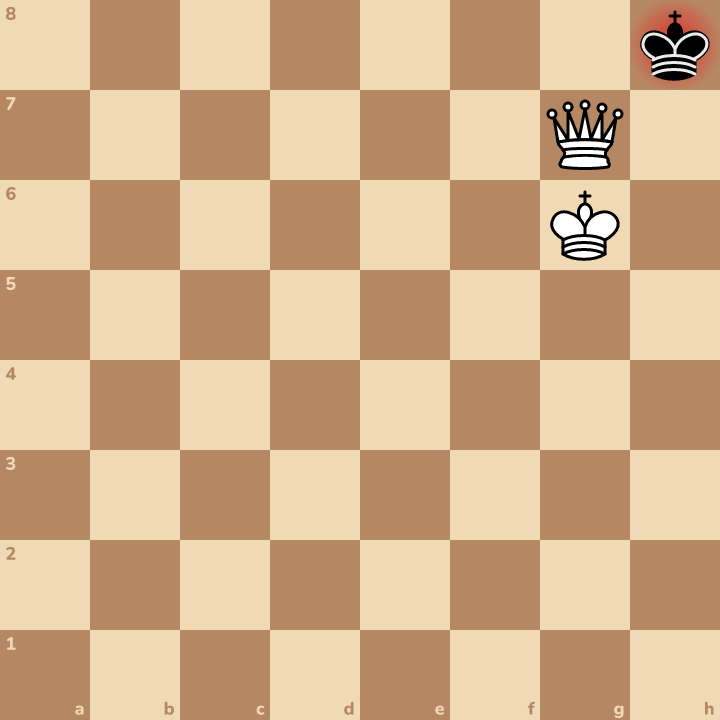
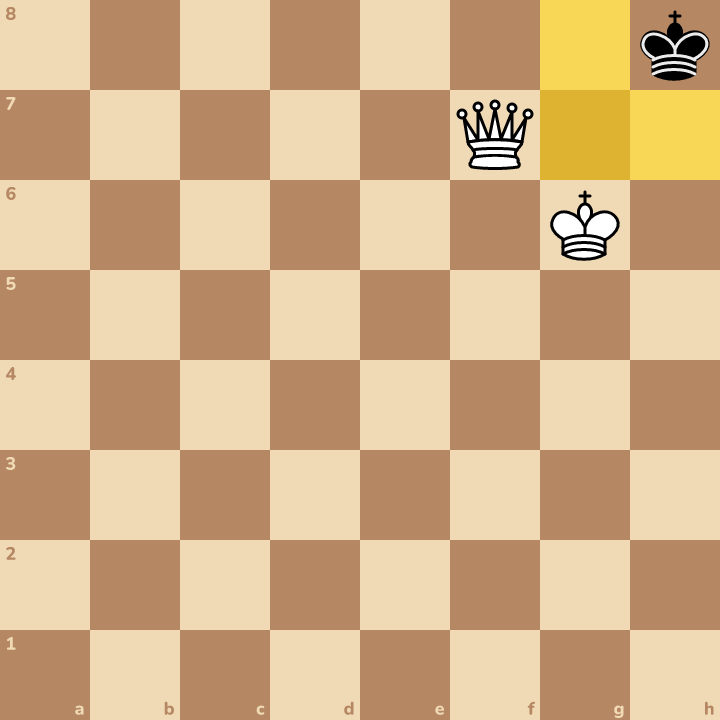
Free: what is check?, what is checkmate?, what is stalemate? and the checkmate or stalemate worksheet.
6The special moves
Three rules to add once the pieces feel easy:
- Castling: the king moves two squares towards a rook, and the rook jumps over to the square beside it. It's allowed only if neither piece has moved, the squares between them are empty, and the king is not in check, doesn't pass through an attacked square and doesn't land on one. It tucks the king away safely.
- Promotion: a pawn reaching the far side becomes a queen, rook, bishop or knight. Your child already knows this from the pawn race.
- En passant: if a pawn moves two squares and lands right beside an enemy pawn, that pawn may capture it as if it had moved only one, on the very next move only. It's rare, so teach it last.
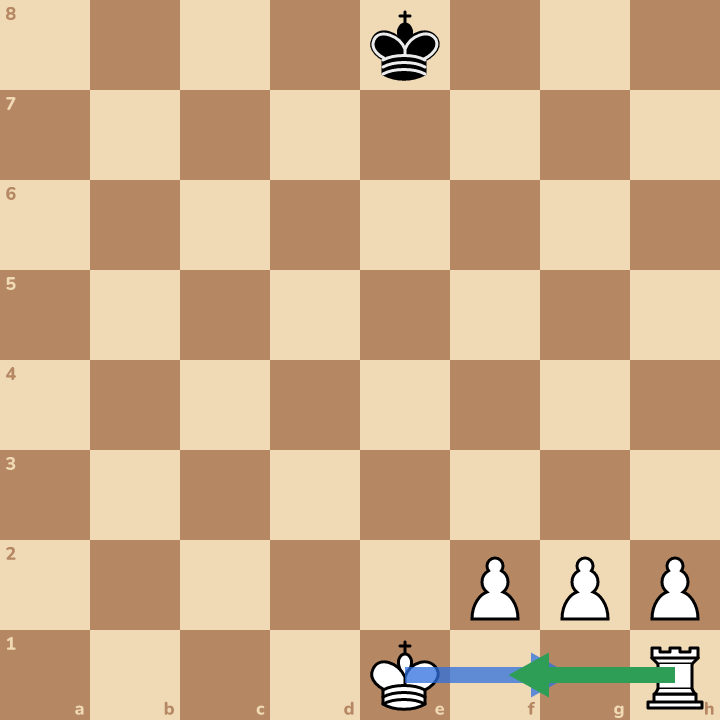
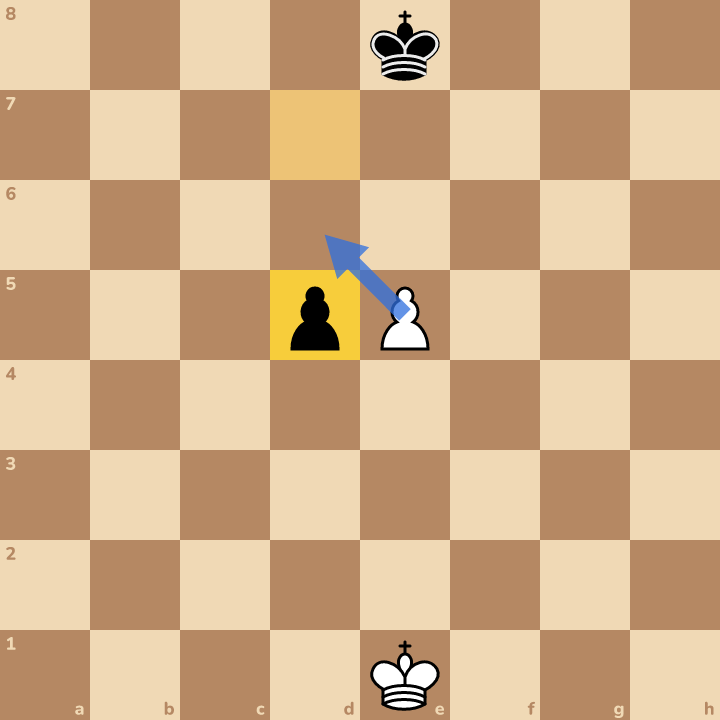
Free: how to castle, what is en passant? and every rule on one printable sheet: chess rules for kids.
7Whole games
Now play whole games. Most games between beginners are won by whoever loses fewer pieces, so teach one question to ask before every move: "Can my piece be taken where it lands?" If an enemy piece can capture it and nothing of yours can capture back, it isn't safe there. A few weeks later, add a second: "What does their last move attack?"
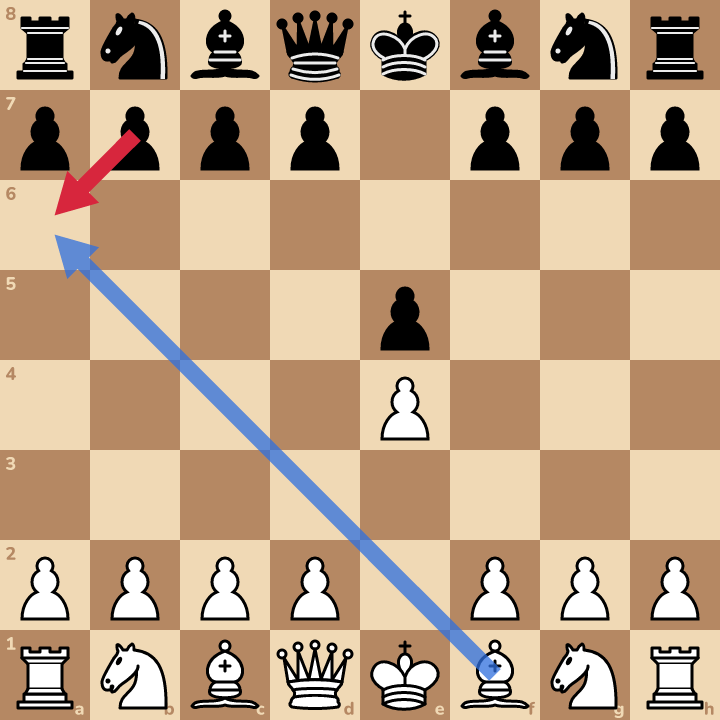
For the start of the game, three ideas are enough: put a pawn in the middle (begin with 1.e4 or 1.d4), bring out the knights and bishops, and castle. Then watch what the other player does: if they leave a piece unguarded, take it; if they bring the queen out early, attack it with a knight or bishop that's coming out anyway.
Free: keep your pieces safe, develop and castle and why start with e4?
8Finishing the game
A child who is a queen ahead still has to checkmate, and that's a skill of its own. Teach checkmate with a king and queen against a lone king: the queen boxes the king towards the edge, the king walks up to help, and the queen gives mate on the edge. Watch for stalemate on the way.
Then the first tricks that win things: the fork (one piece attacks two at once, and only one can escape) and the back-row checkmate (a king stuck behind its own pawns is mated by a rook or queen on the back row). A few puzzles a day teaches these faster than long games.
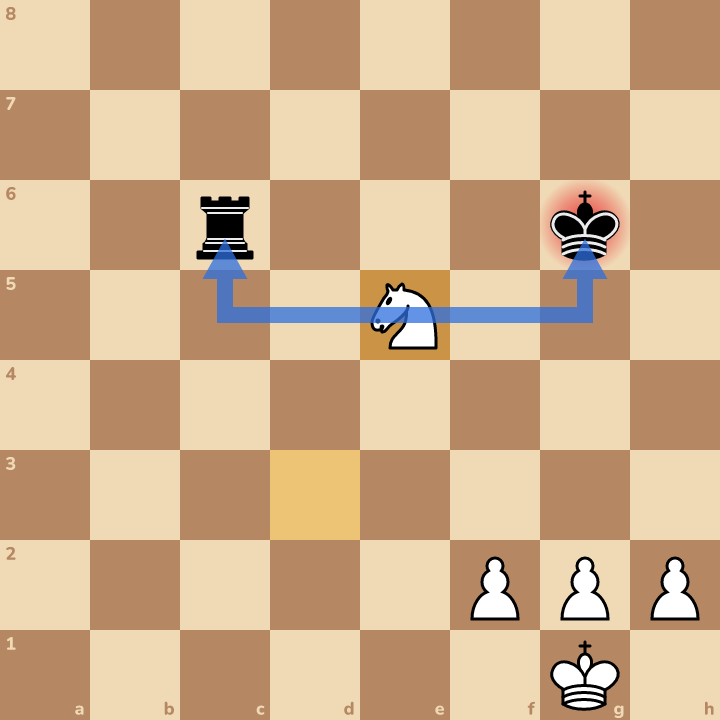
Free: checkmate with king and queen, what is a fork?, back-row checkmate, the checkmate in one worksheet and the puzzle of the day.
How you can help as you go
- Say why, not just "good" or "bad". "Your bishop is safe there because your pawn guards it" teaches more than "good move".
- Before they move, ask what could go wrong. Show the move a beginner would play and what happens next, then let them find a better one.
- Praise good thinking, not only winning: "You spotted that my knight could take it!"
- Celebrate each step: our free chess certificates mark the big ones, from every piece to the first checkmate.
- Talk about the game afterwards: one good move and one move to try differently next time.
- Find other children to play: brothers and sisters, cousins, friends, a school or junior club.
Questions parents ask
What age should you teach your child chess?
Many children can learn how the pieces move from about 4, and play a whole game with every rule somewhere between 5 and 7. There's no upper limit: children who start at 8, 10 or 13 learn the rules in days. Our age guides say what works for 3 year olds, 4 and 5 year olds, 6 and 7 year olds and 8 to 10 year olds.
Do I need to be good at chess to teach my child?
No. You need to know how the pieces move, and you can learn that a step ahead of your child. Each of our free lessons takes a few minutes and works for grown-ups too.
How long does it take a child to learn chess?
With ten or fifteen minutes most days, a 6 or 7 year old usually knows every rule within a few weeks. A 4 year old takes longer and that's fine: one piece at a time, with no rush.
Should I let my child win?
In the little games, at first, yes. In whole games, play fairly but help: point out when a piece is in danger before they move it, or take a move back. Losing to a grown-up who explains why is one of the best ways to learn.
Is it better to learn on a real board or an app?
Both help. Touching real pieces helps young children remember the moves, and playing together at a table is the fun part. An app is good for short lessons and puzzles on their own, and for checking the rules when you're not sure.
What if my child gets bored or upset?
Stop while it's still fun and come back tomorrow. Go back to a little game they can win. When they lose a whole game, shake hands, say "good game" and find one thing they did well.
My Chess Family in one minute
- A free chess app for children from age 4, teenagers too, and their families, made in the UK
- No chat: children can't type to anyone, only send eight friendly emotes
- No strangers: friends join only by a one-time code from a grown-up
- No ads, no purchases, no links out of the app
- A grown-up sees every lesson, puzzle and game
- Built around the UK Children's Code
- Works in a web browser, best on an iPad; families apply and we approve each one
More for parents: chess for 3 year olds · 4 and 5 year olds · 6 and 7 year olds · 8 to 10 year olds · free worksheets · is online chess safe?