The opposition from far away
A free lesson from My Chess Family for children learning chess. Read it together, try each question on a real board, or print it out.
Download the printable sheet (PDF) Play this lesson on the board
Opposition from far away
The opposition works from far away too. Here the kings face each other with three squares between.
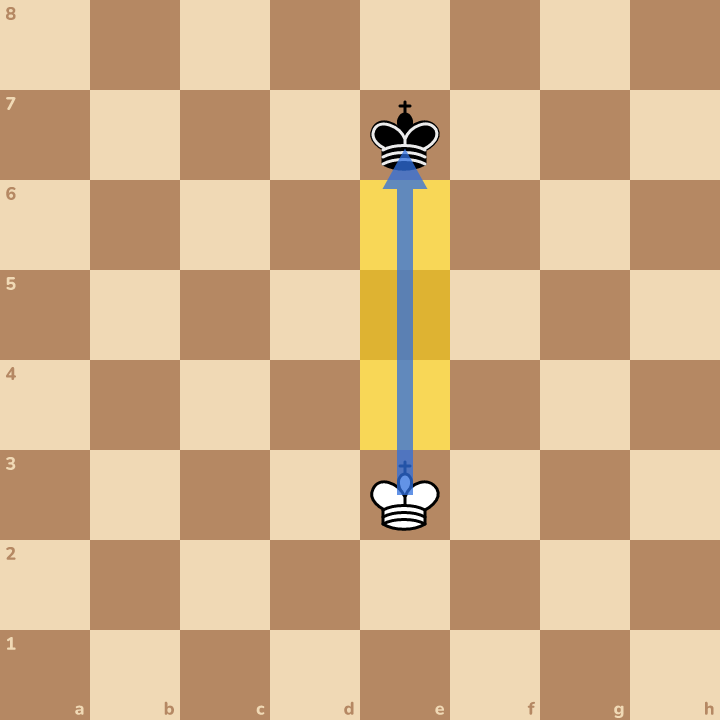
If it's his move, you have the opposition. Each time he steps, you step and face him again. Soon he has to give way.
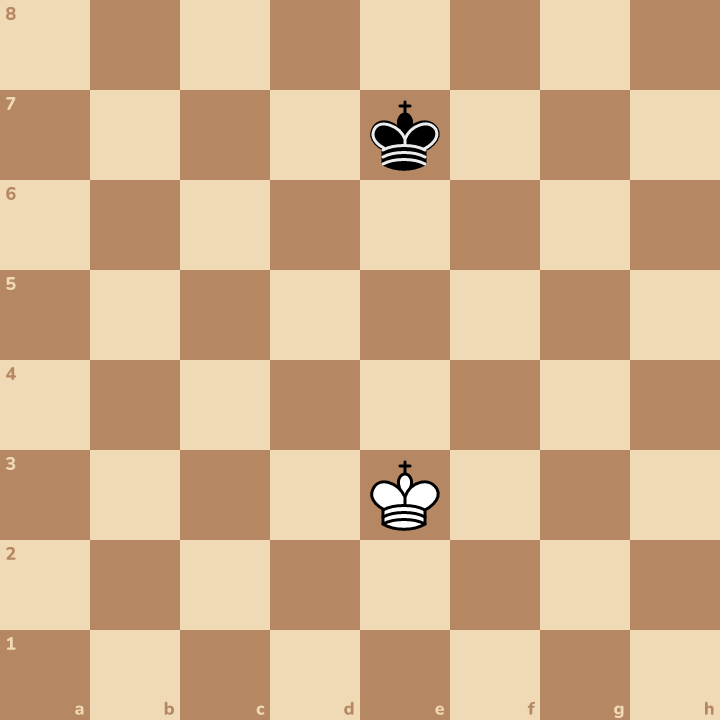
The rule. One, three or five squares between the kings, and his move? Then you have the opposition.
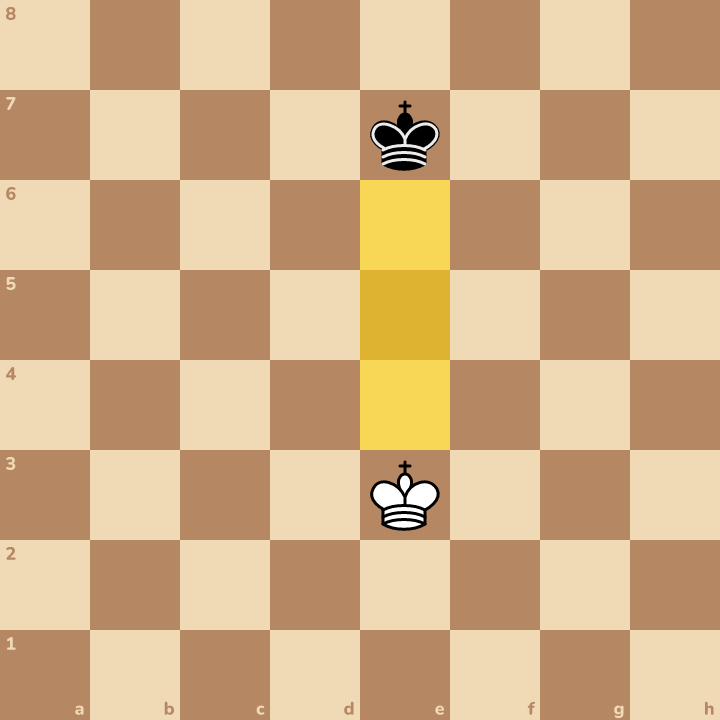
Here's a new position, from Capablanca. Your king wants to get past his king and win a black pawn.
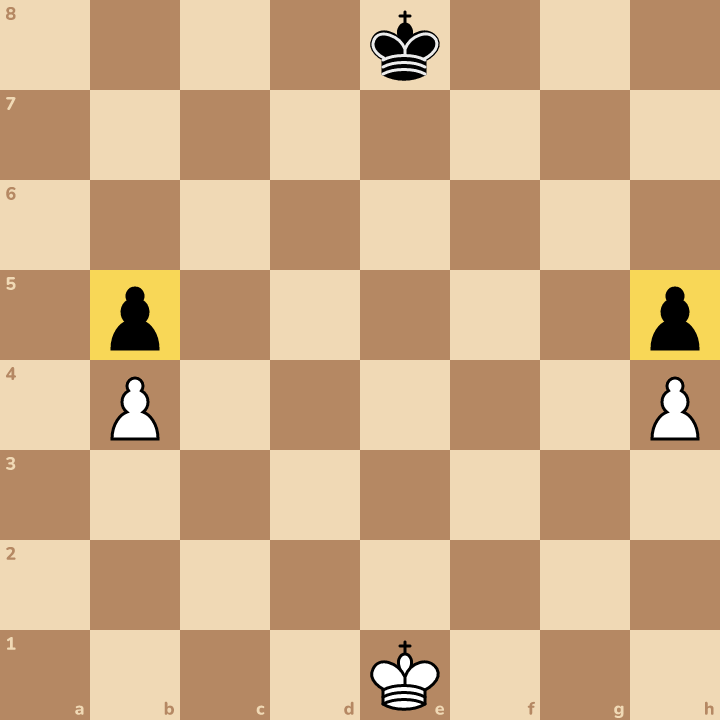
Try it 1. How many squares are between the kings? A: 5B: 6C: 7
Show the answer
B: 6
Six. That isn't one, three or five! So step one square closer. Then there are five, and it's his move.
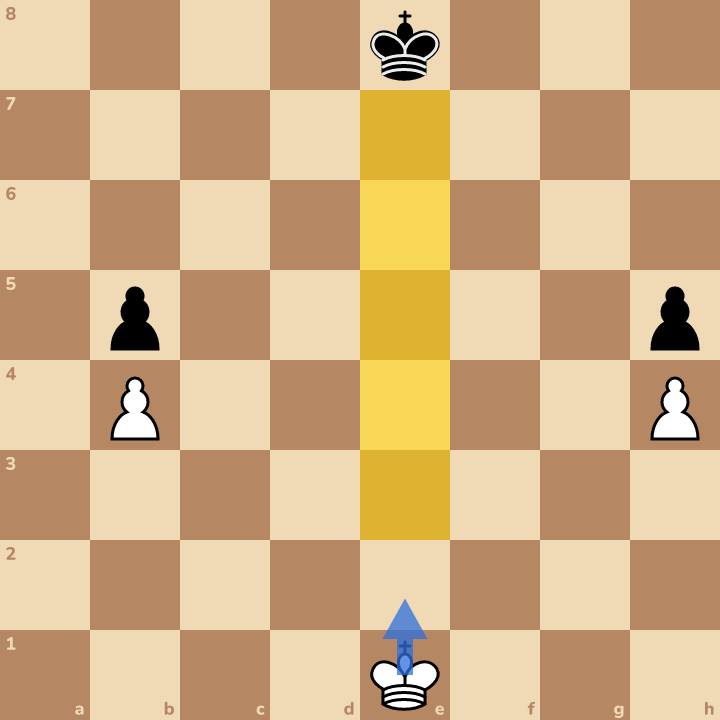
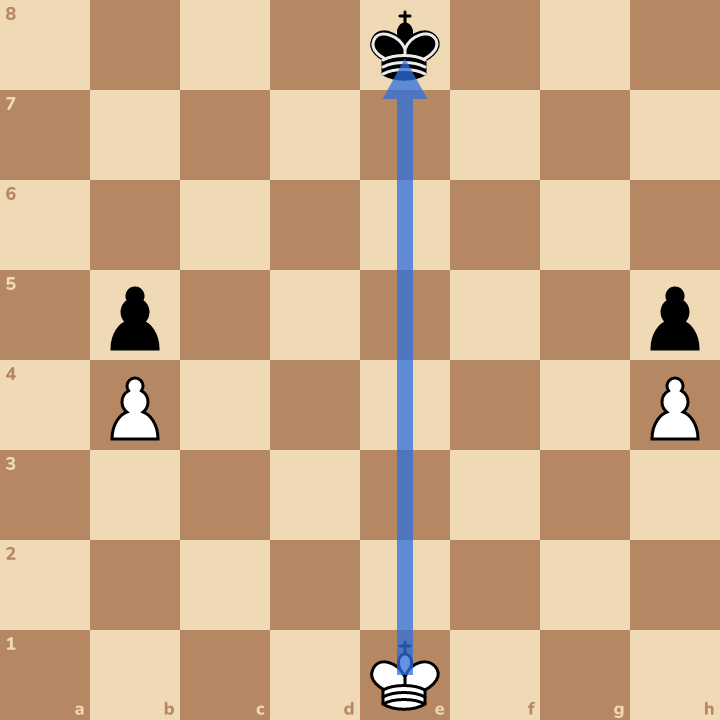
Try it 2. Take the opposition from far away.
Show the answer
Ke2
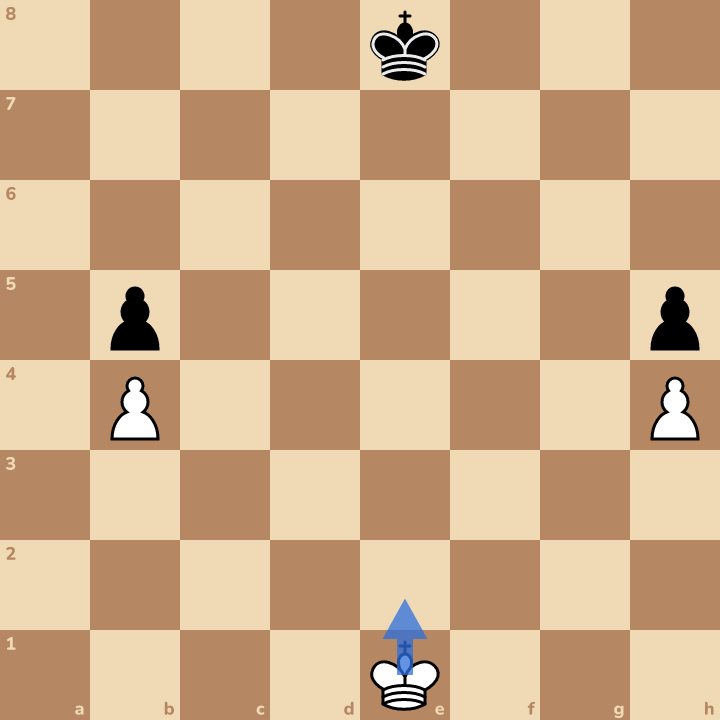
Try it 3. He stepped closer too. Face him again, with three squares between.
Show the answer
Ke3
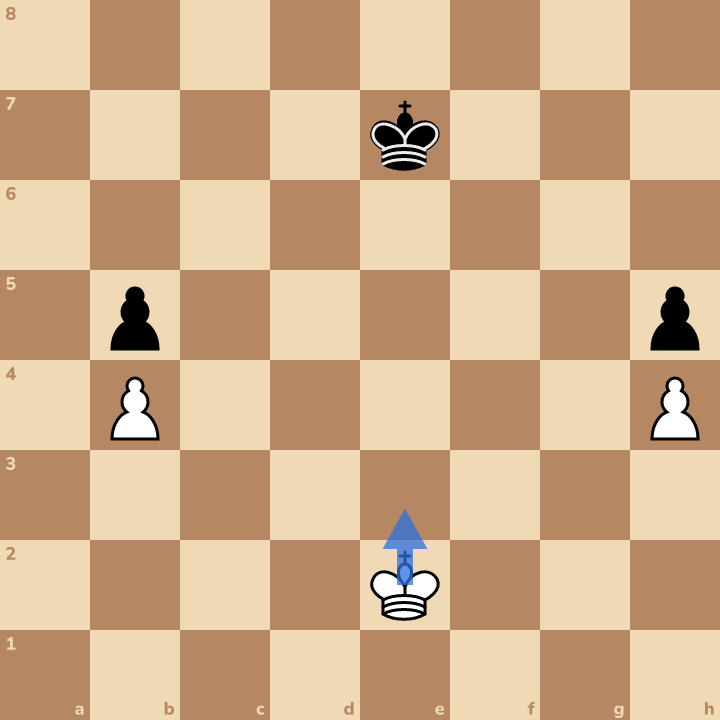
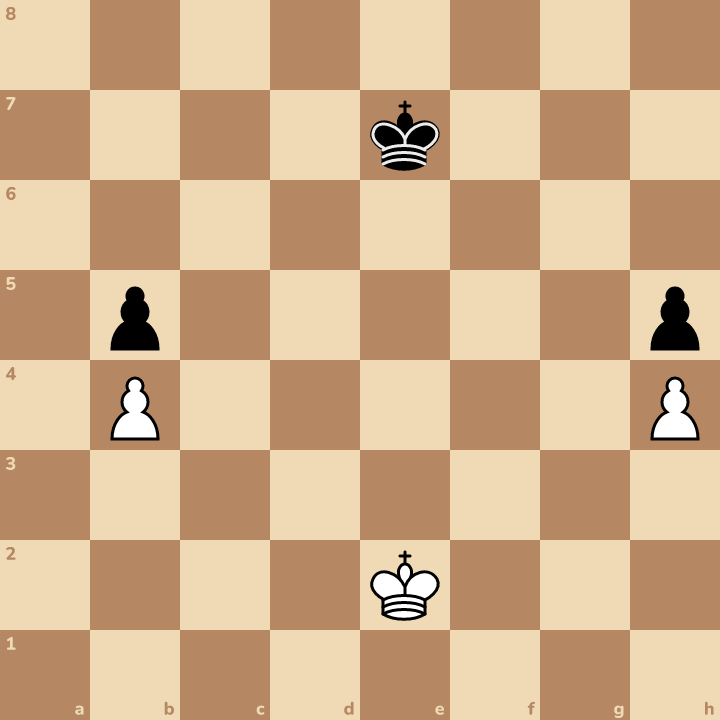
Try it 4. Your turn.
Show the answer
Ke4
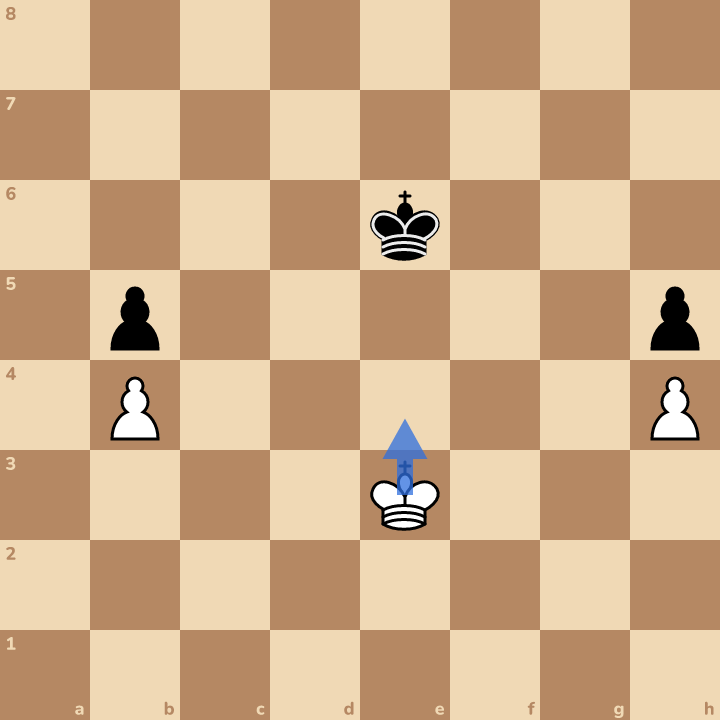
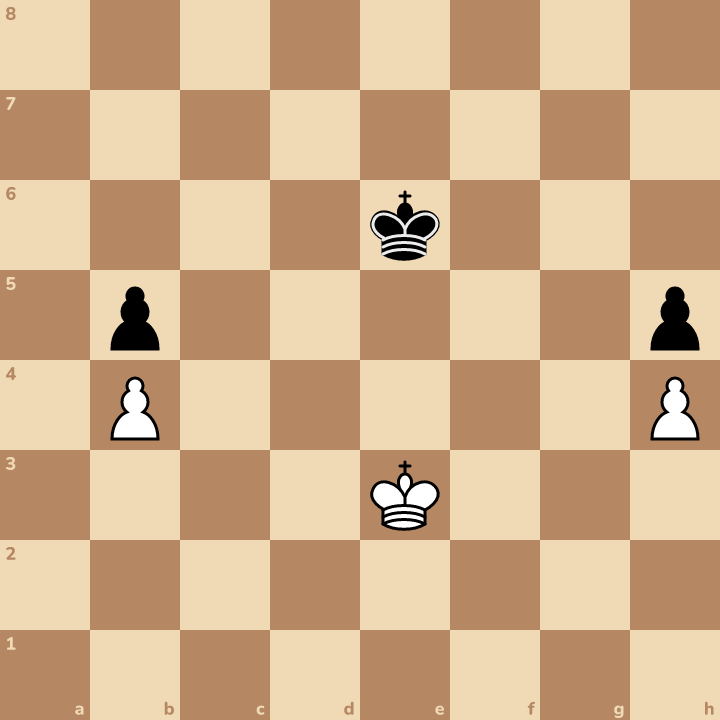
Try it 5. He gave way and stepped to the side. Face him again.
Show the answer
Kf4
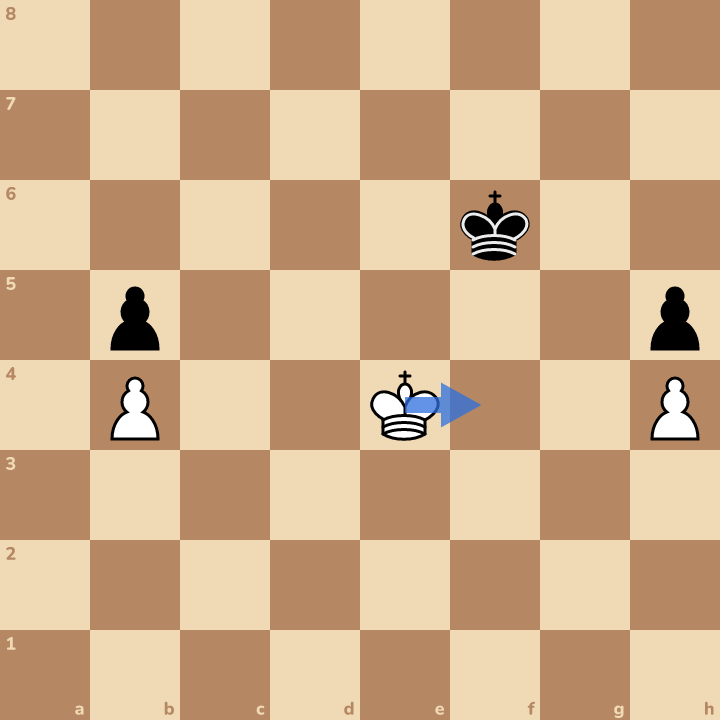
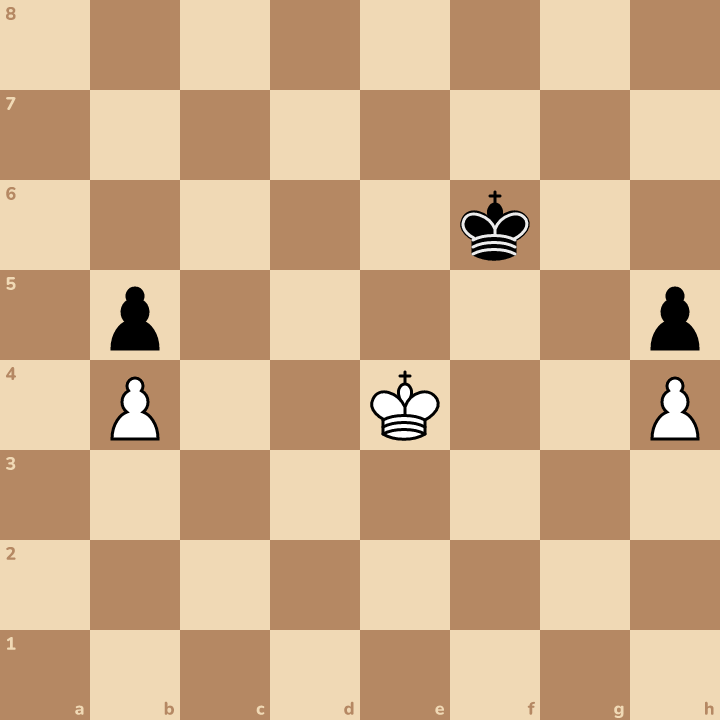
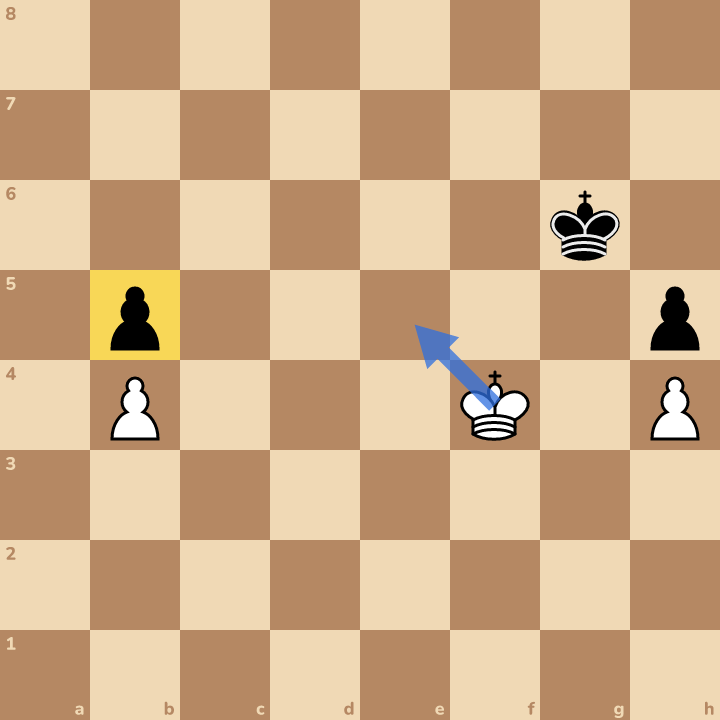
He has to give way again. Next, your king can walk past him and go for the pawn on b5.
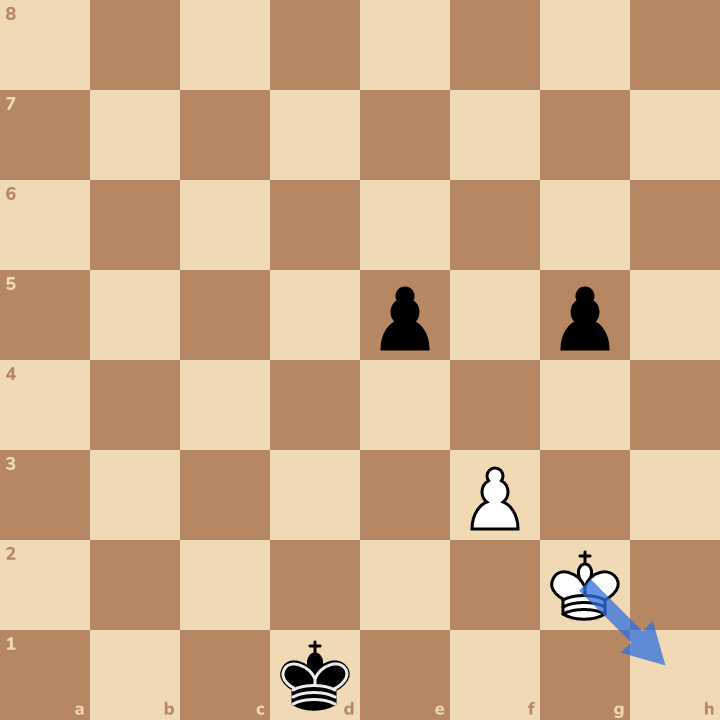
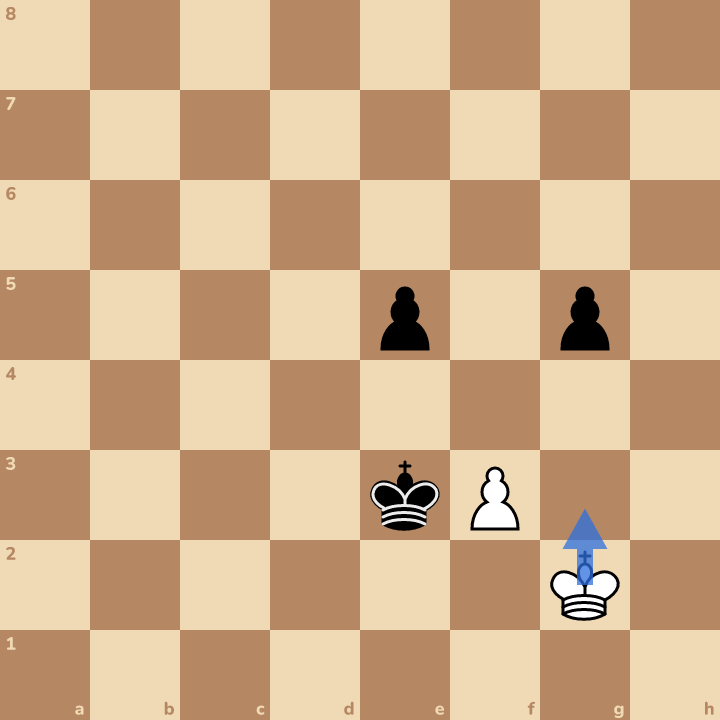
Here's a new position. Now it's your turn to stop him. His king wants to come round and win your pawn on f3.
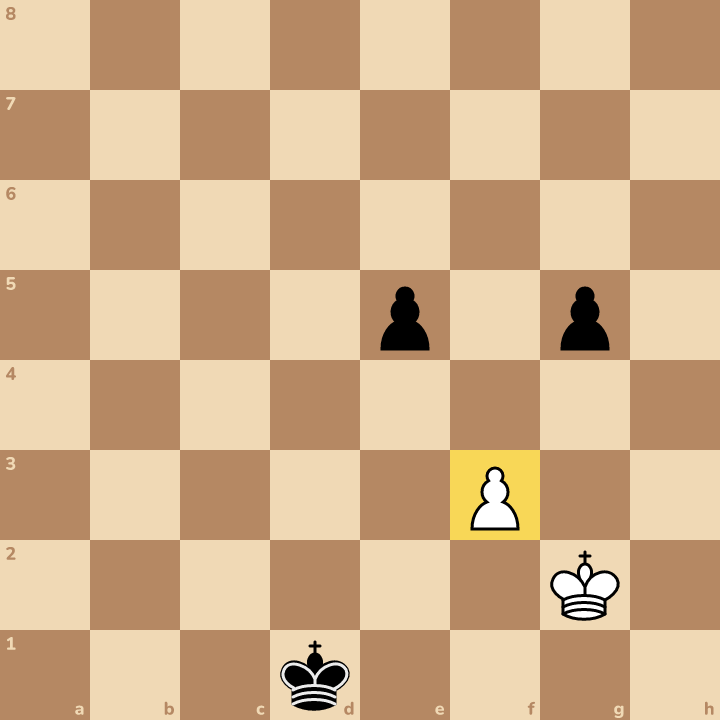
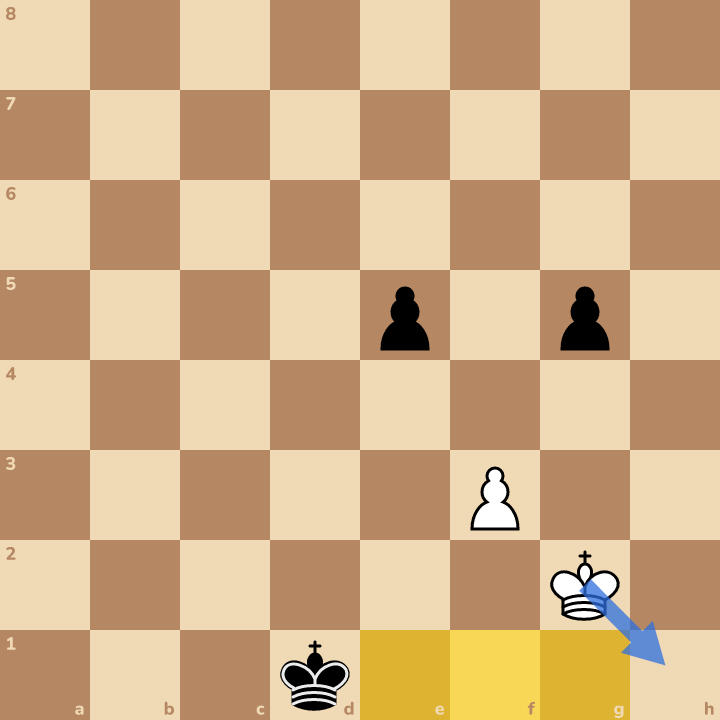
Kf1 faces him close up. But after Kd2 Kf2 Kd3, your king would need f3 to face him, and your own pawn is there.
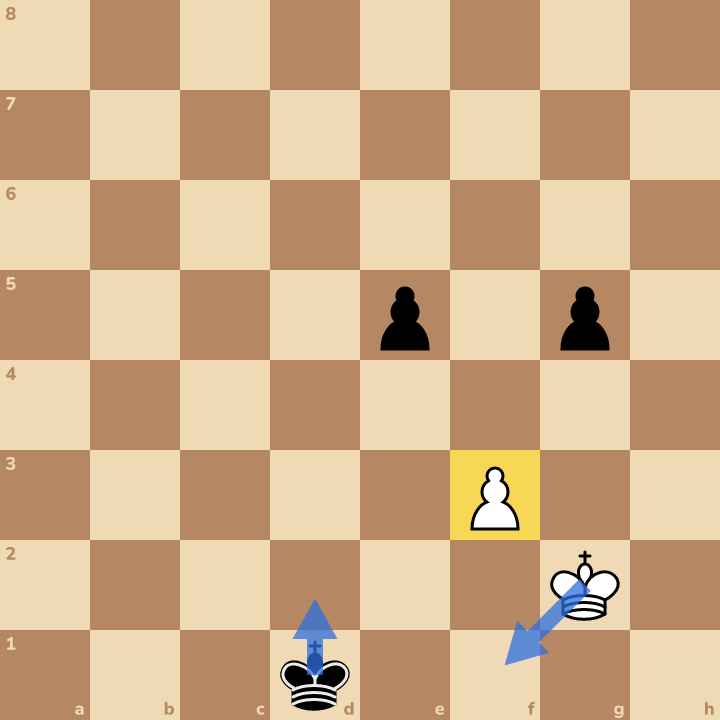
Try it 6. So face him from far away, along the row, with three squares between.
Show the answer
Kh1
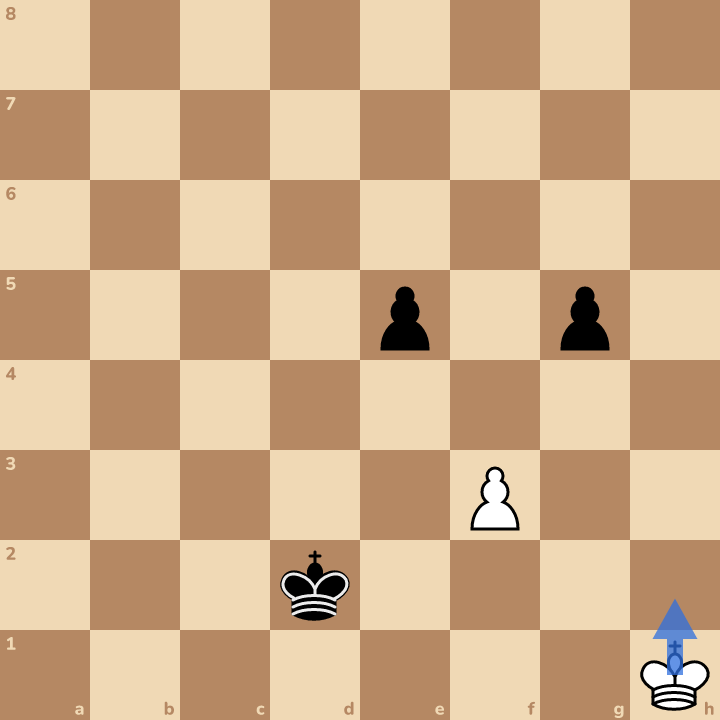
Try it 7. He stepped up. Step up too, and face him again.
Show the answer
Kh2
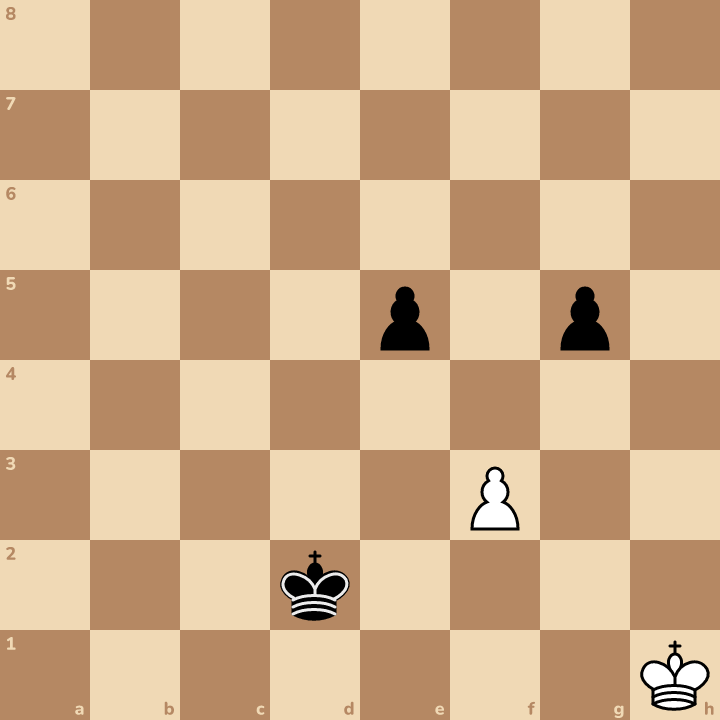
Try it 8. Your turn.
Show the answer
Kh3
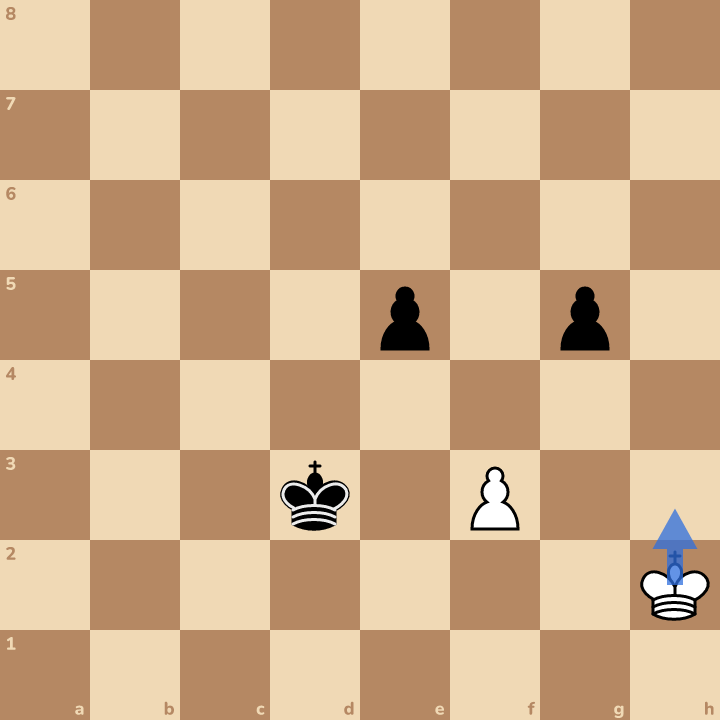
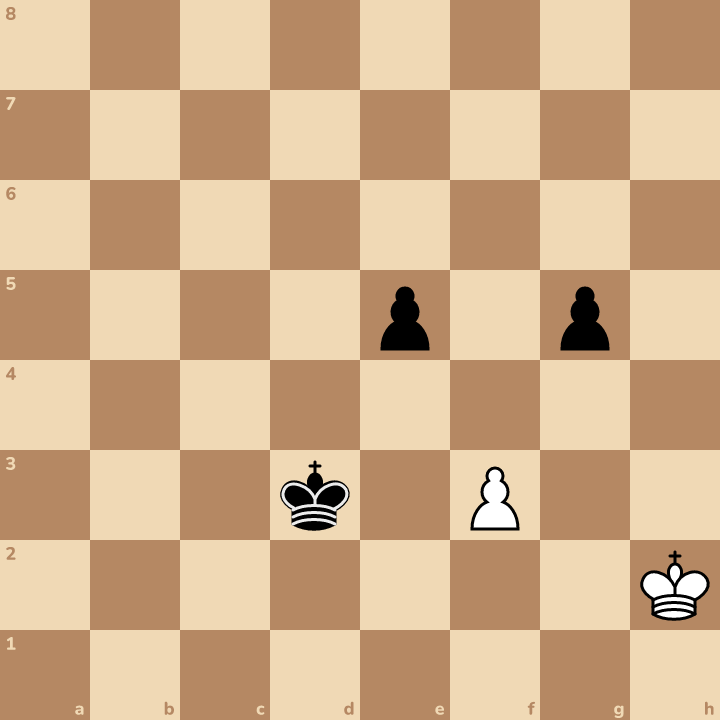
Try it 9. He came one square closer. Face him, with one square between.
Show the answer
Kg2
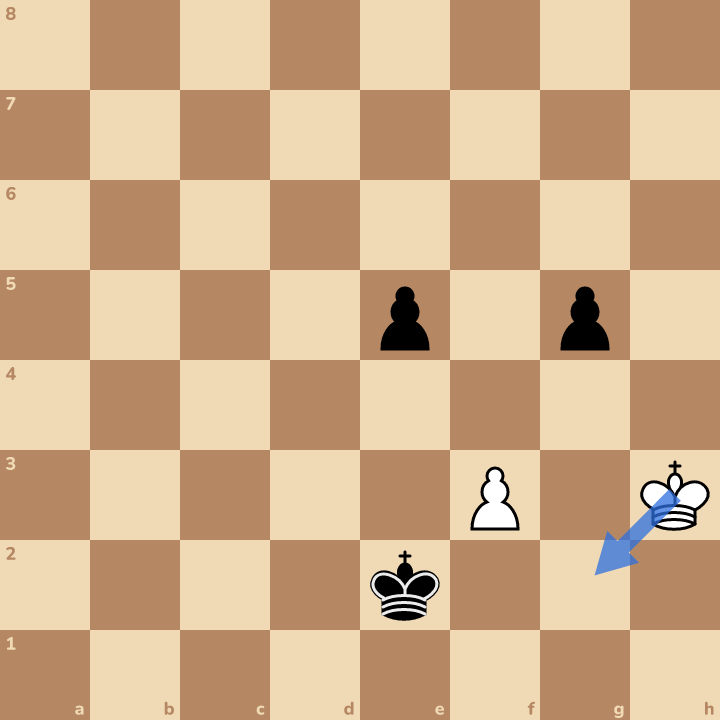
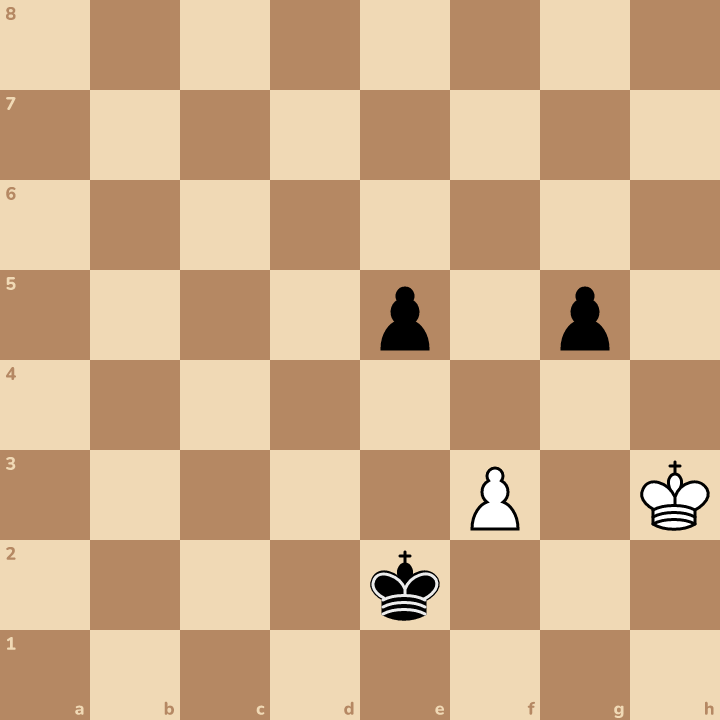
Try it 10. Your turn.
Show the answer
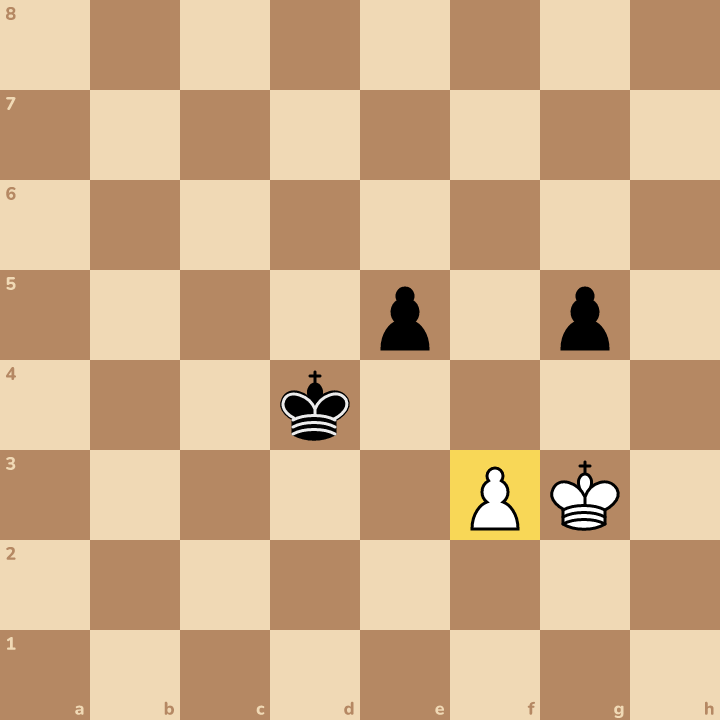
Kg3
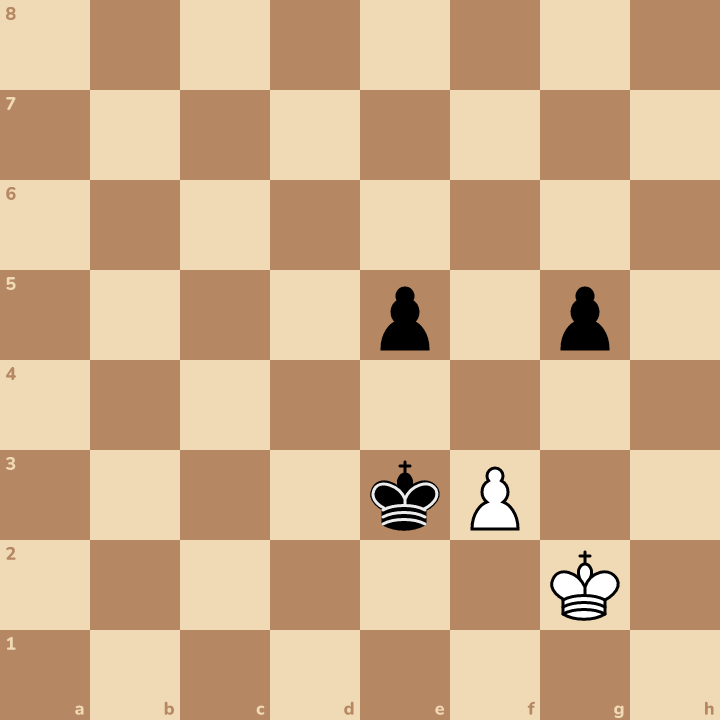
He can't get past your king to the pawn. It's a draw. The far opposition saved the game!
Next: The corner pawn: why a rook’s pawn often draws
Learn with the whole family
This lesson comes from My Chess Family, a chess app where children learn and play with their family and friends: no chat, no ads and no strangers. Why it's safe for kids.