What is a passed pawn, and how to make one
A free lesson from My Chess Family for children learning chess. Read it together, try each question on a real board, or print it out.
Download the printable sheet (PDF) Play this lesson on the board
Two pawns against one
Here, only the kings and some pawns are left. An extra pawn often wins, but only if you play it the right way.
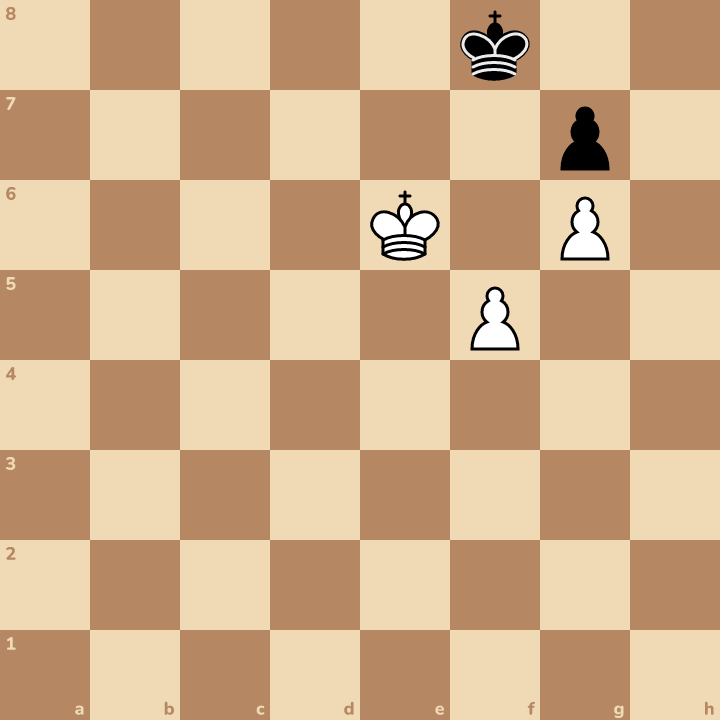
This position is from the world champion Capablanca. You have two pawns, on f5 and g6. Black has one, on g7.
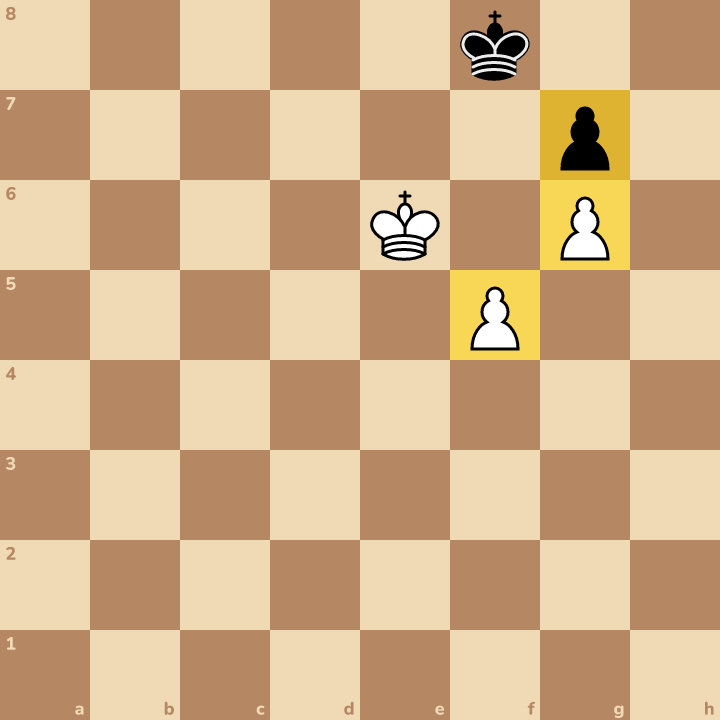
You want to make a queen. But his king on f8 and his pawn on g7 are in the way.
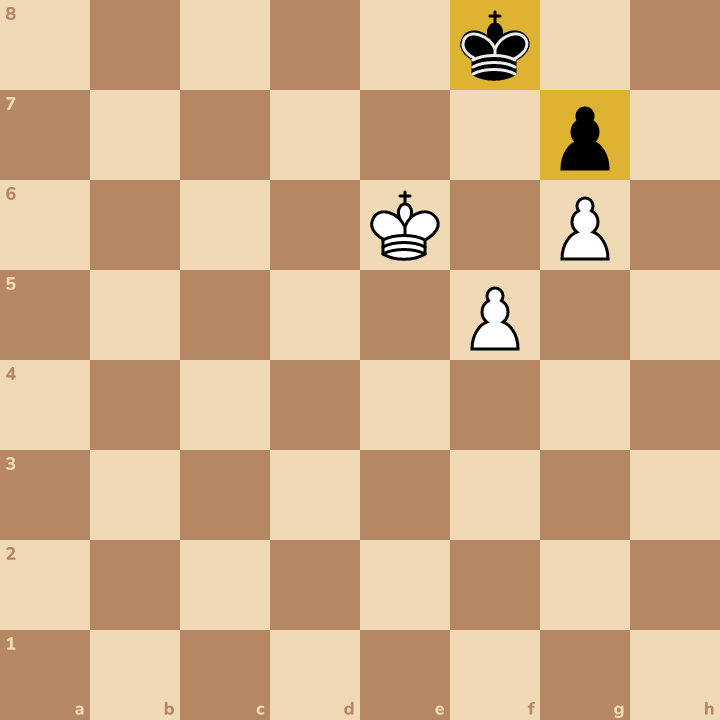
The move that looks best is f6, attacking his pawn. Let's see why it doesn't work.
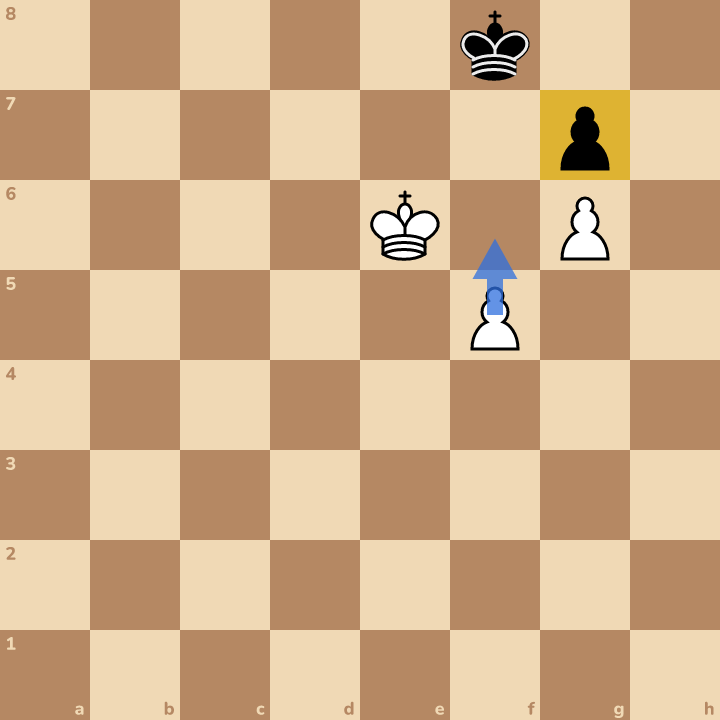
You push f6. He steps his king to g8.
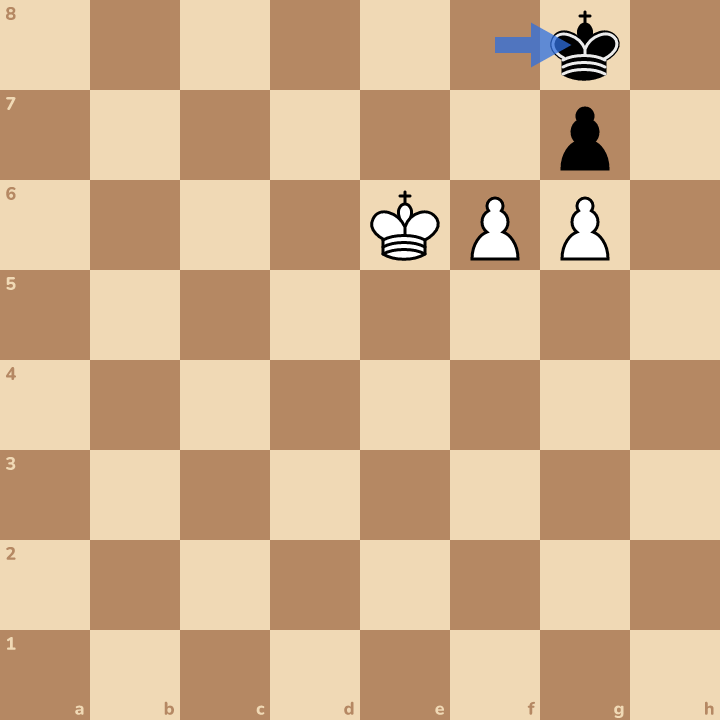
Now you have two tries, fxg7 and f7. Both only draw. Here's the first. Your f-pawn takes his pawn on g7.
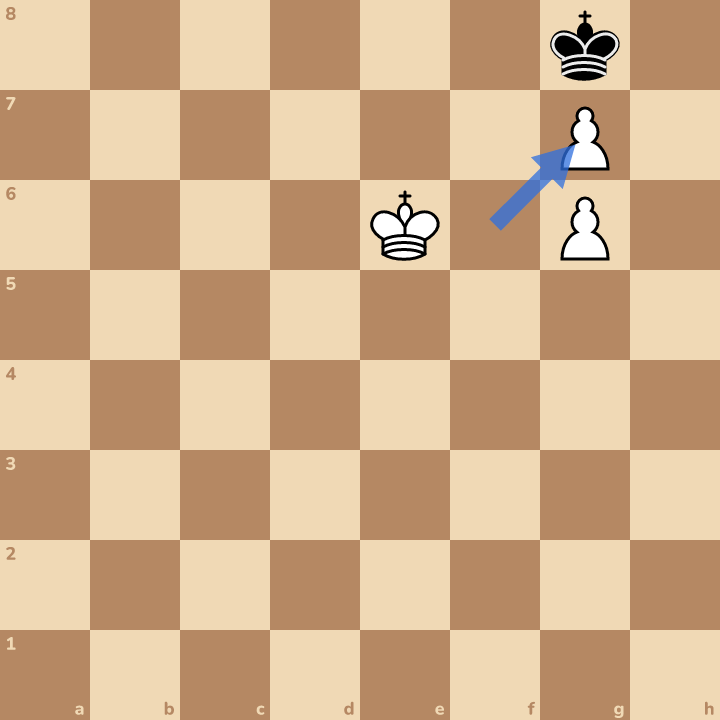
His king takes your pawn back.
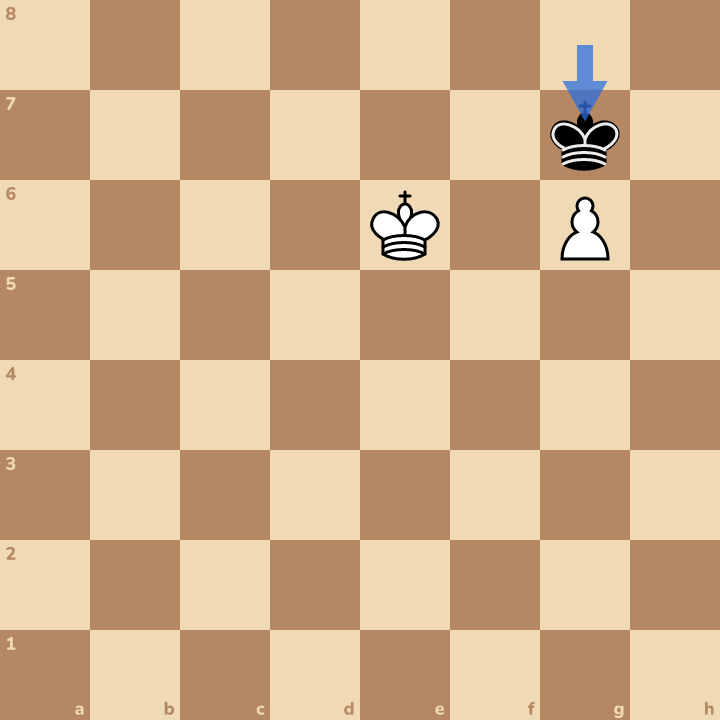
Now his king stands right in front of your last pawn, and your king can't push it away. It's a draw.
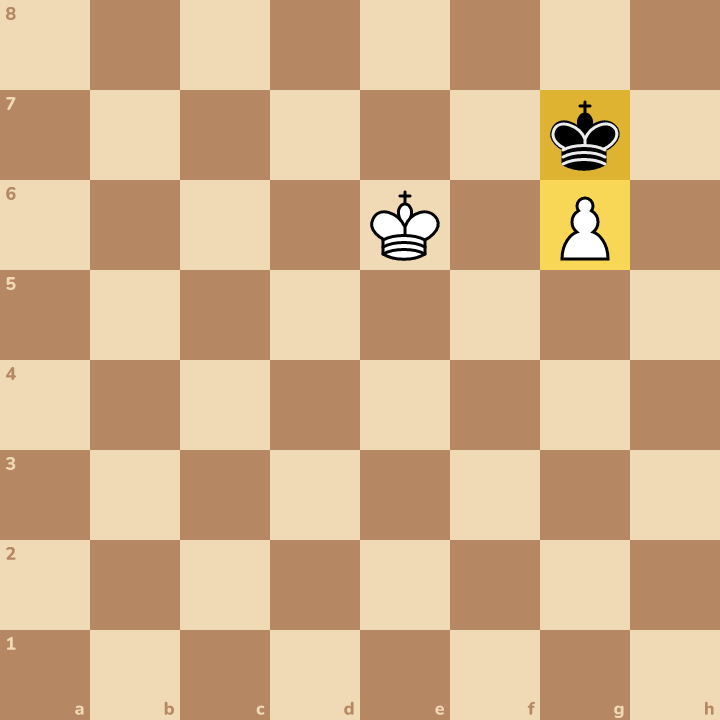
Here's the second try. Go back to where he stepped to g8. This time you push f7, with check.
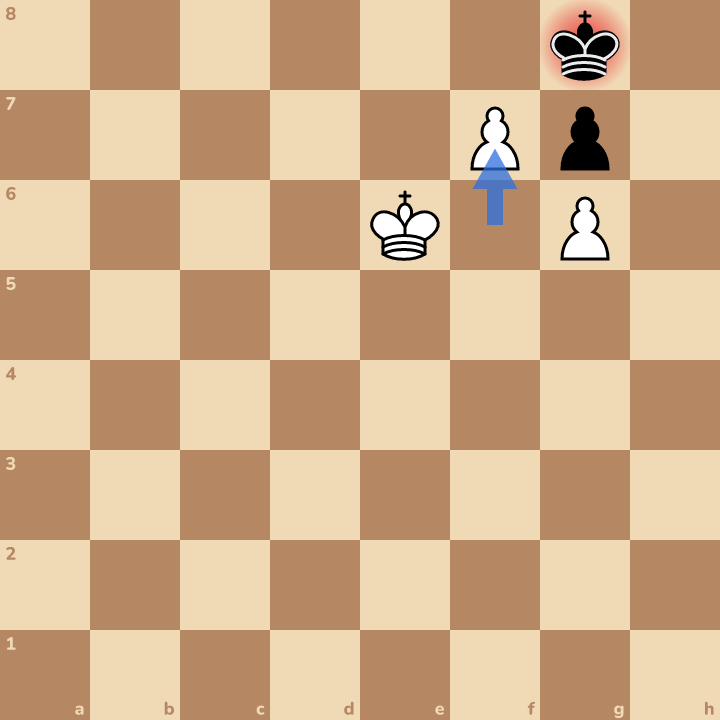
His king steps back to f8. Your pawns are stuck. Your f-pawn can't move with his king on f8, and his pawn blocks your g-pawn.
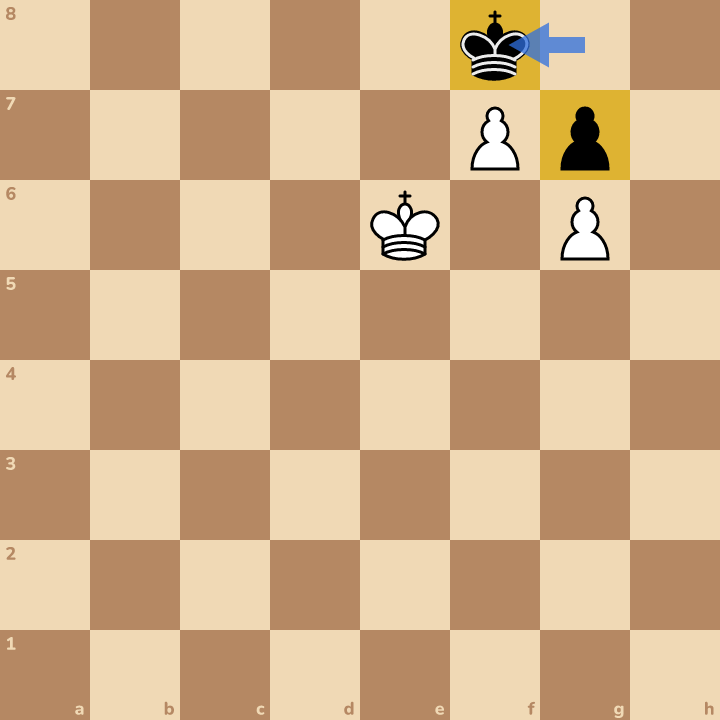
Now it's your move, and your king has to step away. Kd6 or Kd7 is stalemate. His king and his pawn can't move.
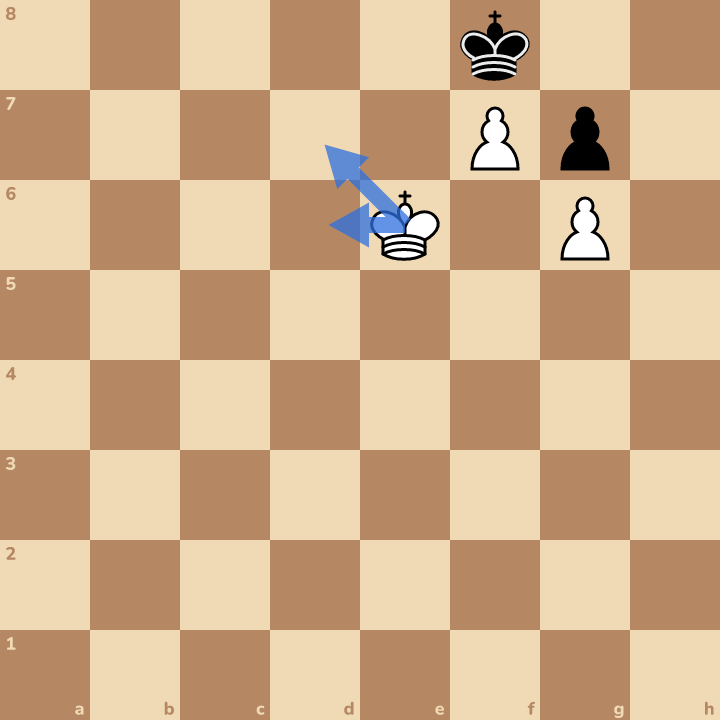
Any other king move lets his king step to e7 and back to f8, again and again. Nobody can win, so it's a draw.
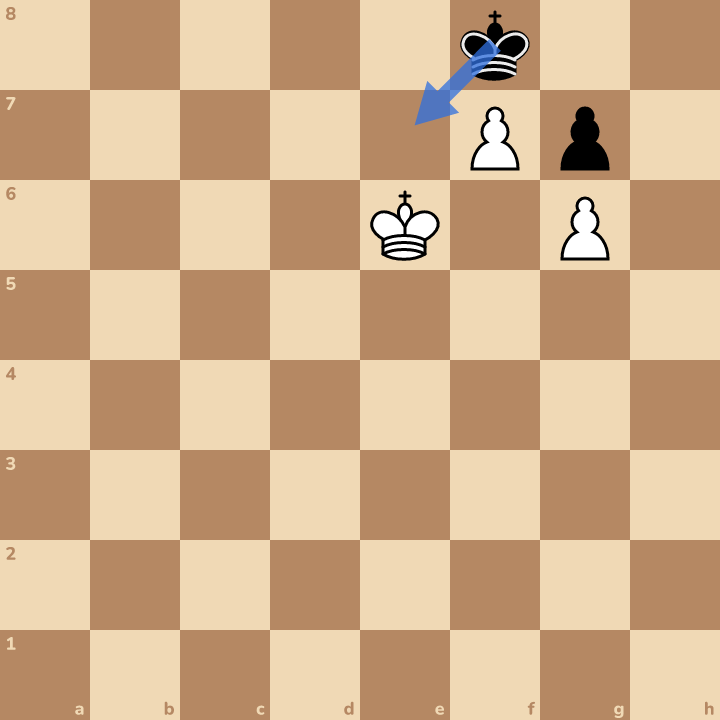
Here's the start again. This time, king first! Walk your king round to e7, where it guards f7 and f8.
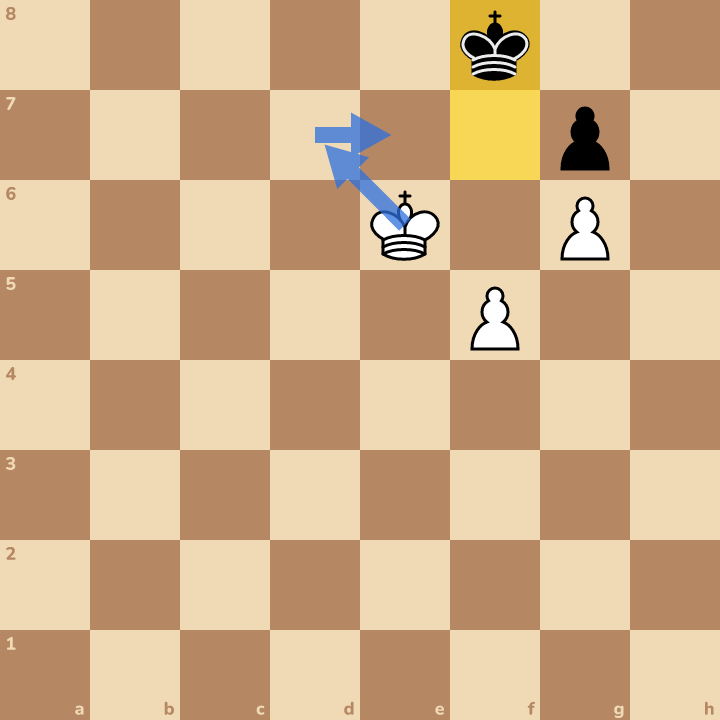
Try it 1. Start with d7.
Show the answer
Kd7
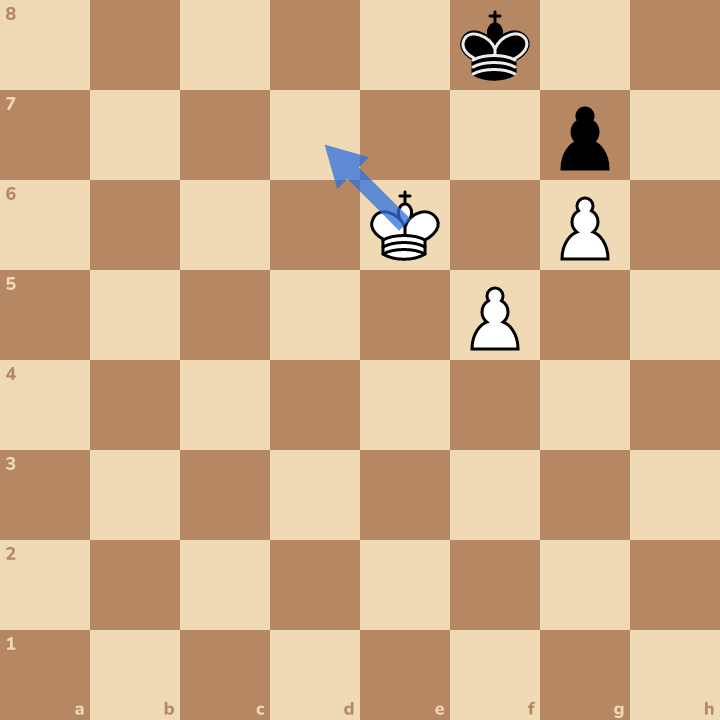
Try it 2. Now step to e7.
Show the answer
Ke7
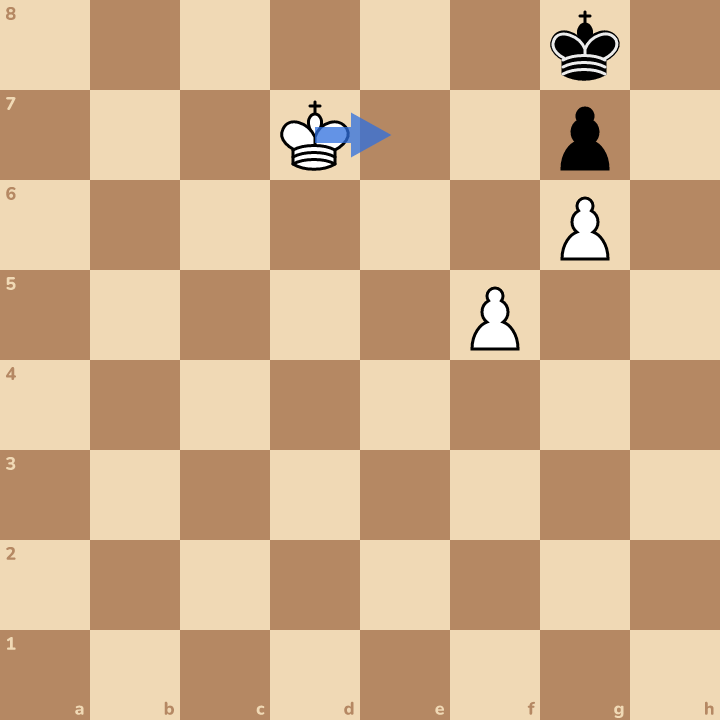
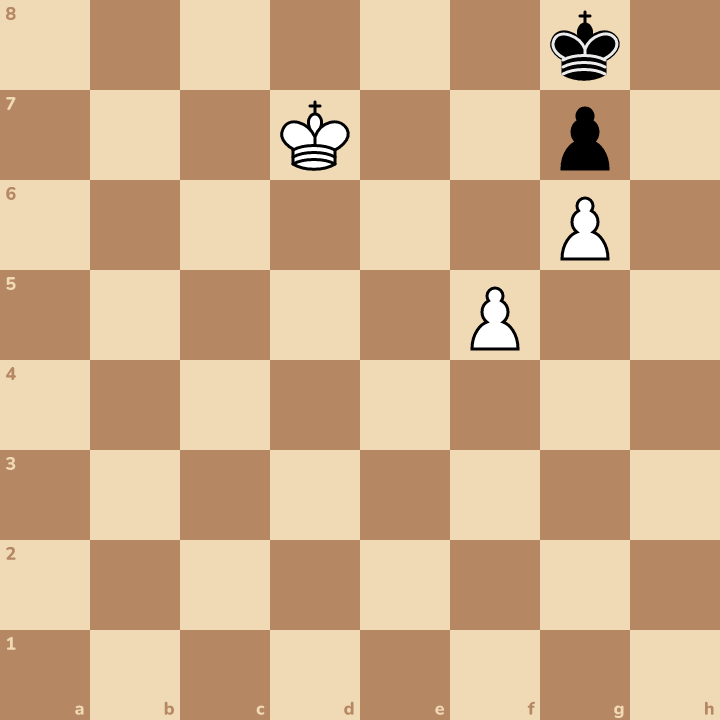
Your king guards f7 and f8. Now push f6. If the g-pawn takes, your g-pawn has a free road.
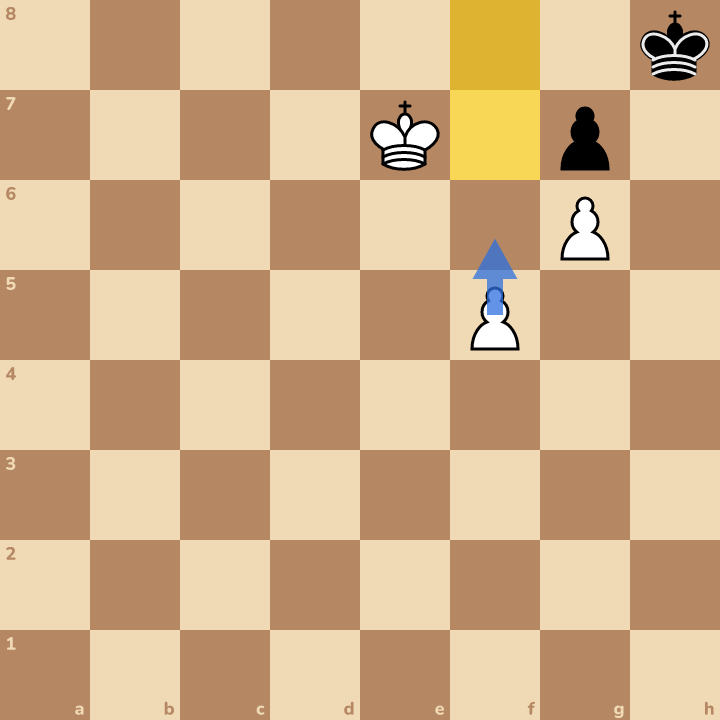
Try it 3. Push your f-pawn.
Show the answer
f6
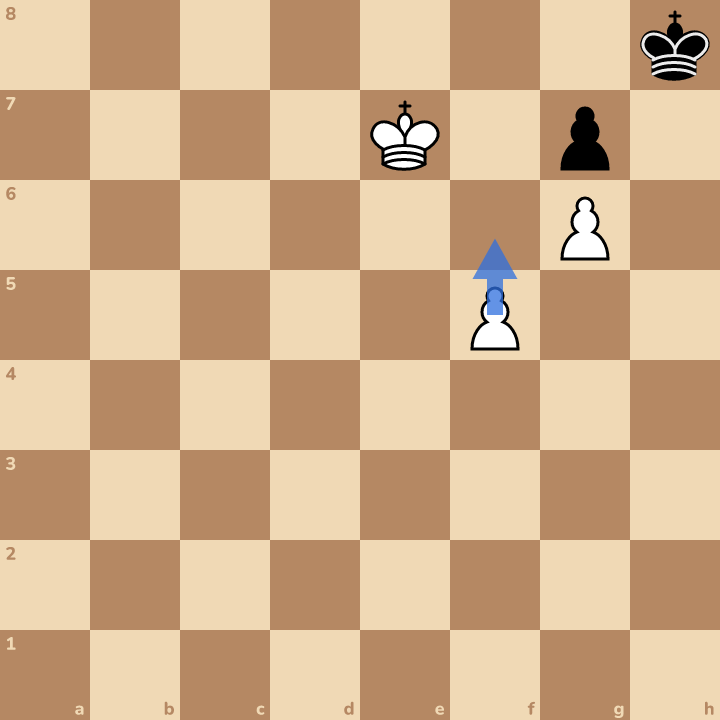
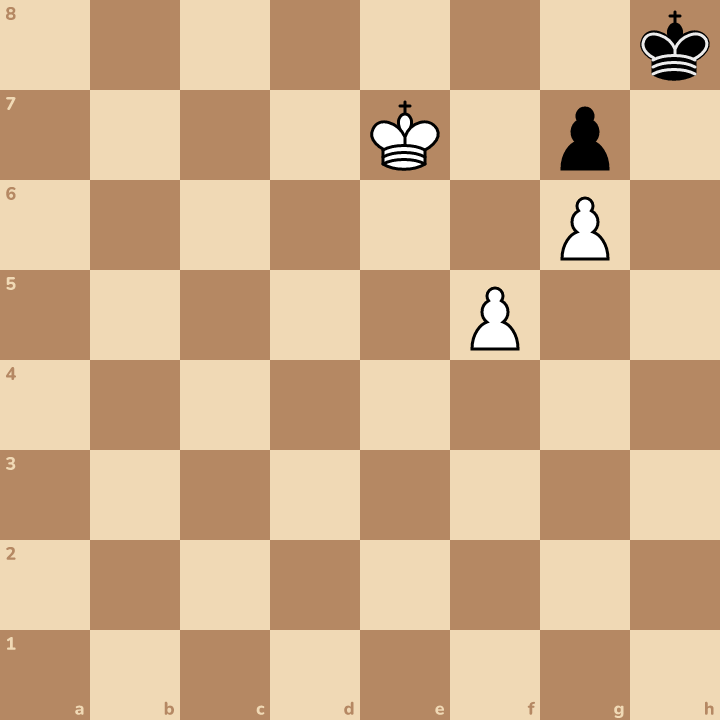
Try it 4. He took. Step to f7, next to your g-pawn. His king can't move then, but he still has a pawn, so it isn't stalemate.
Show the answer
Kf7
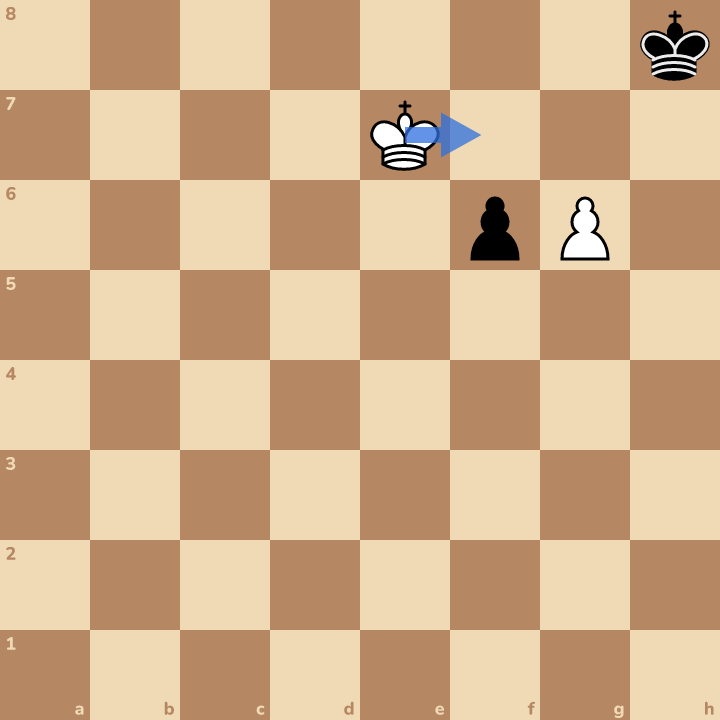
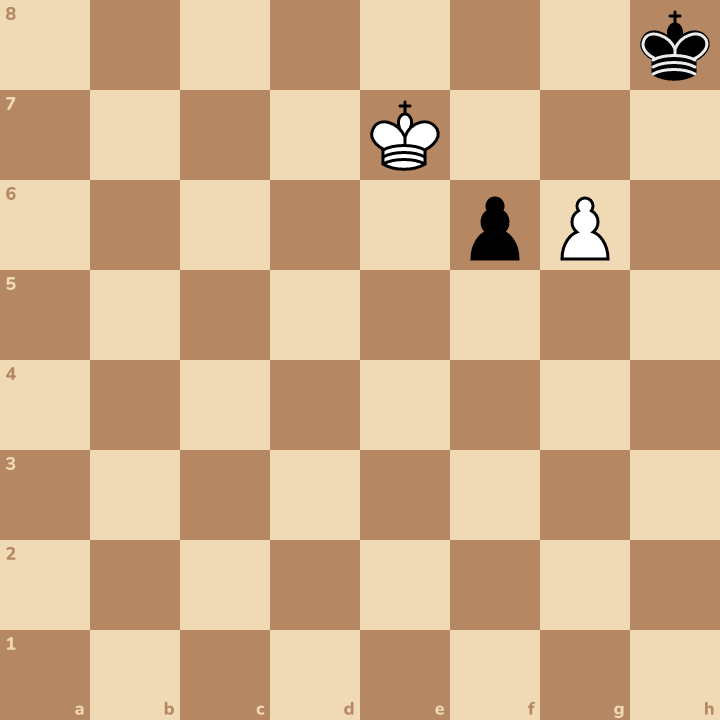
Try it 5. He had to push his pawn to f5. Now push your g-pawn, with check!
Show the answer
g7+
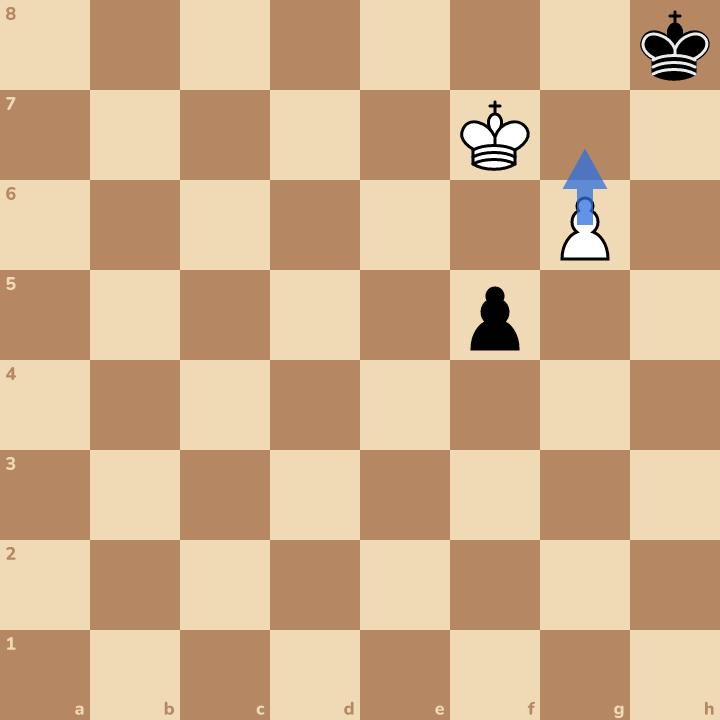
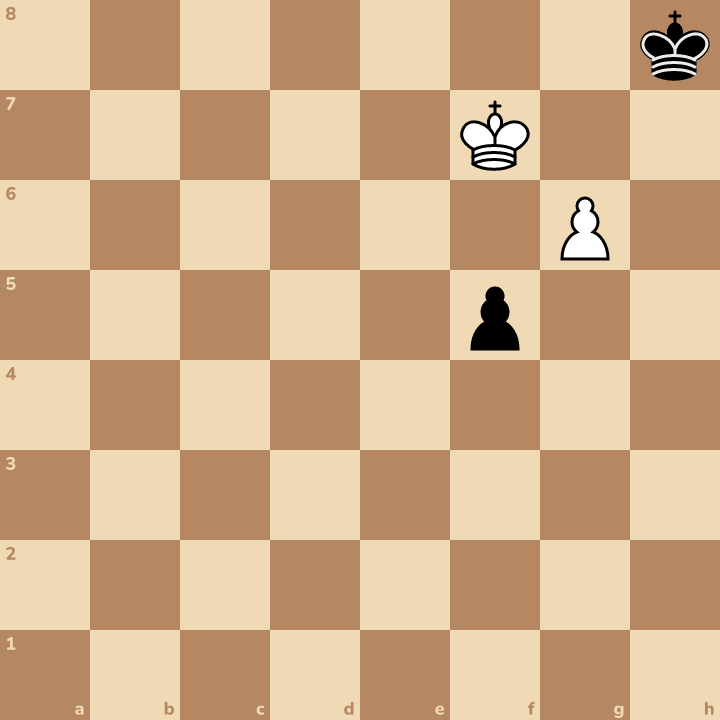
Try it 6. Make a queen, with check!
Show the answer
g8=Q+
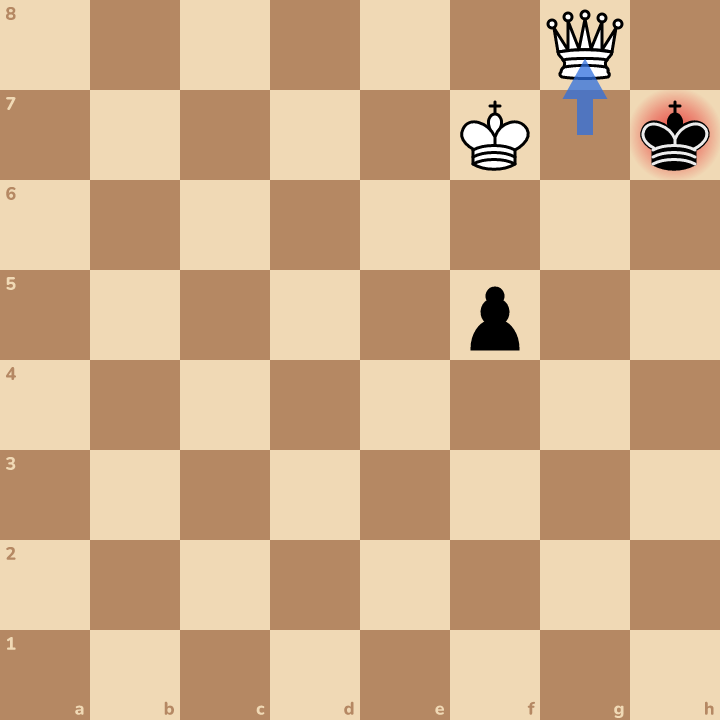
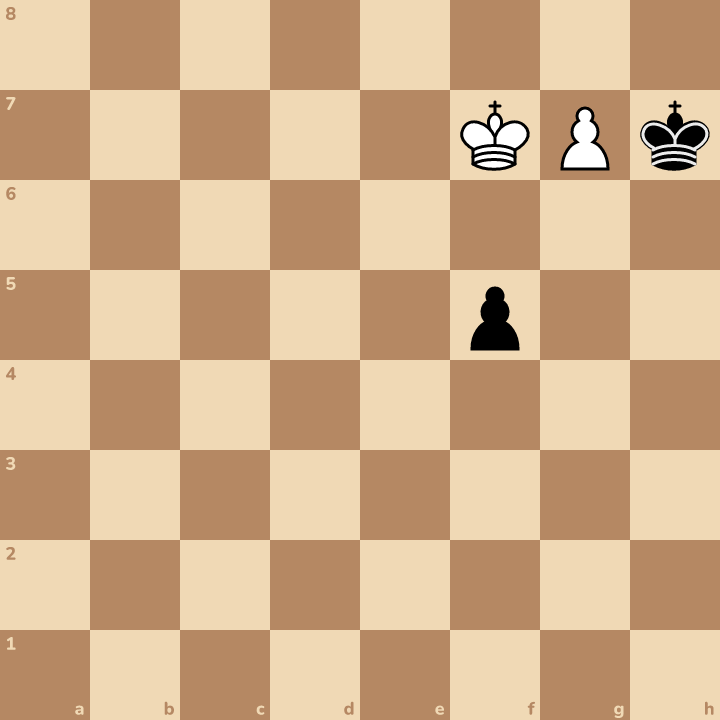
Try it 7. Checkmate in one!
Show the answer
Qg6#
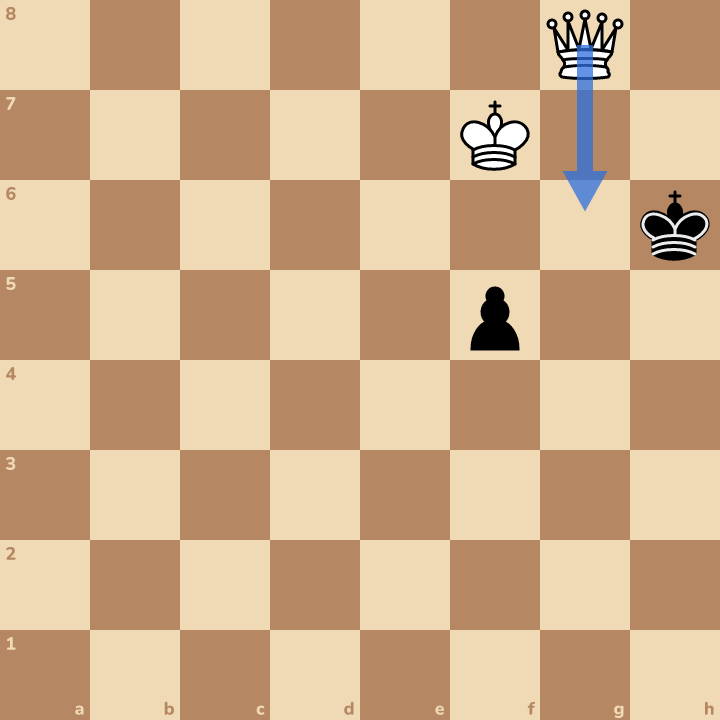
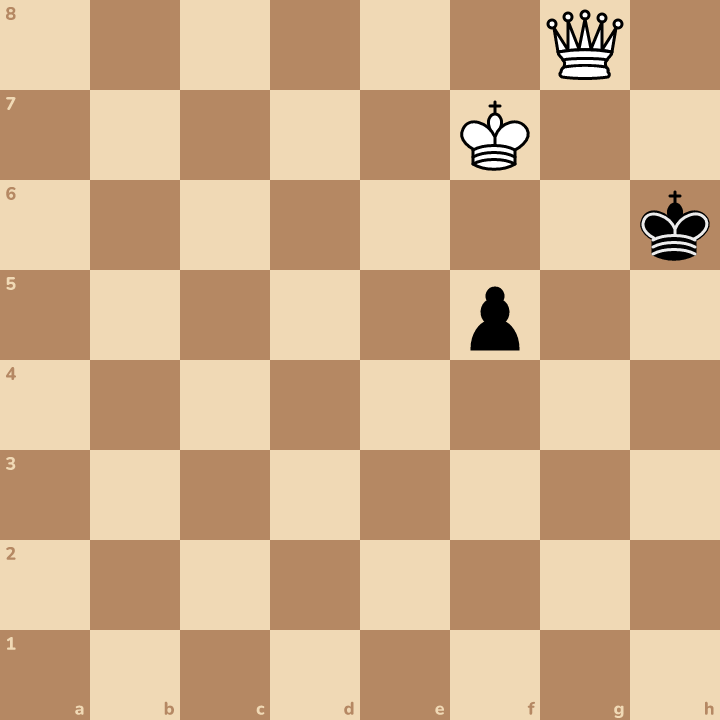
King first, then the pawns. That's how two pawns beat one!
Make a passed pawn
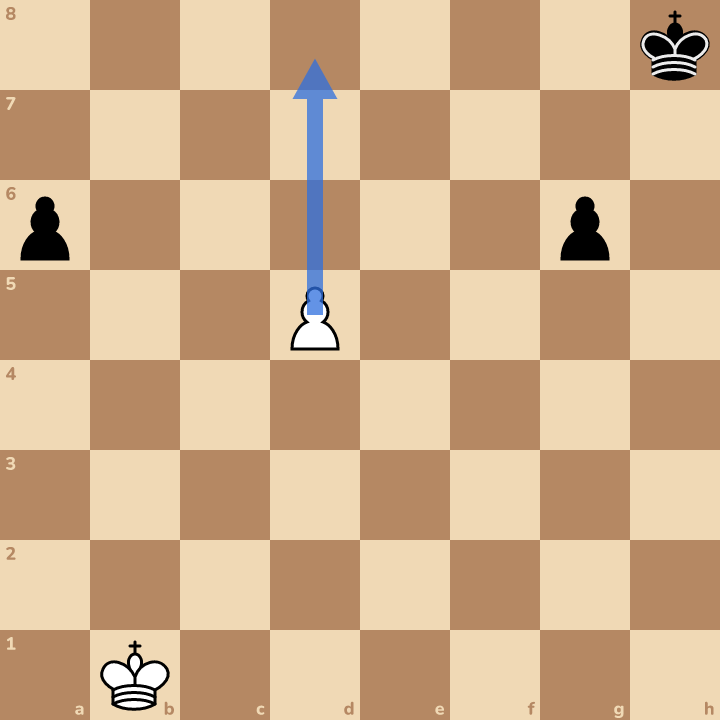
Here's a new idea. No black pawn stands in front of your d-pawn, or on the columns next to it. That's called a passed pawn.
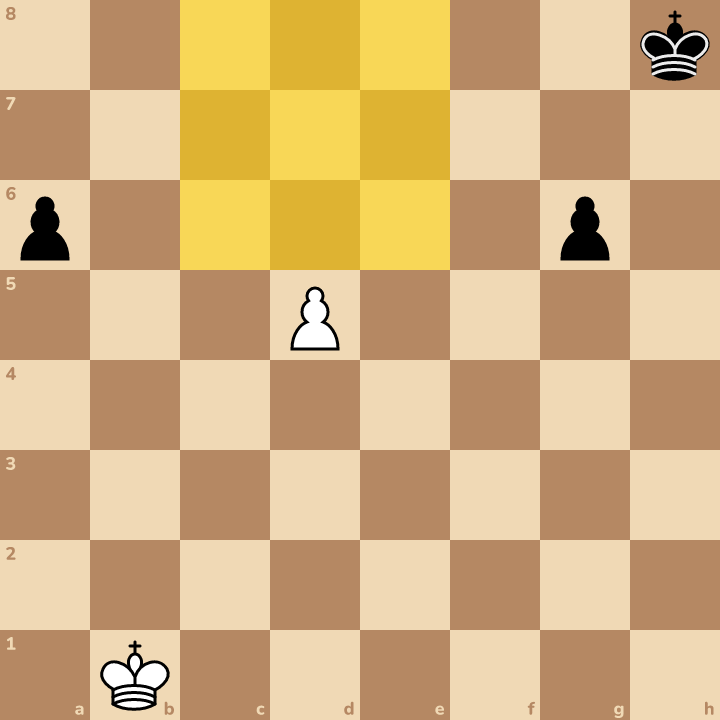
No pawn can stop a passed pawn. Only a king or a piece can. So a passed pawn is very strong.
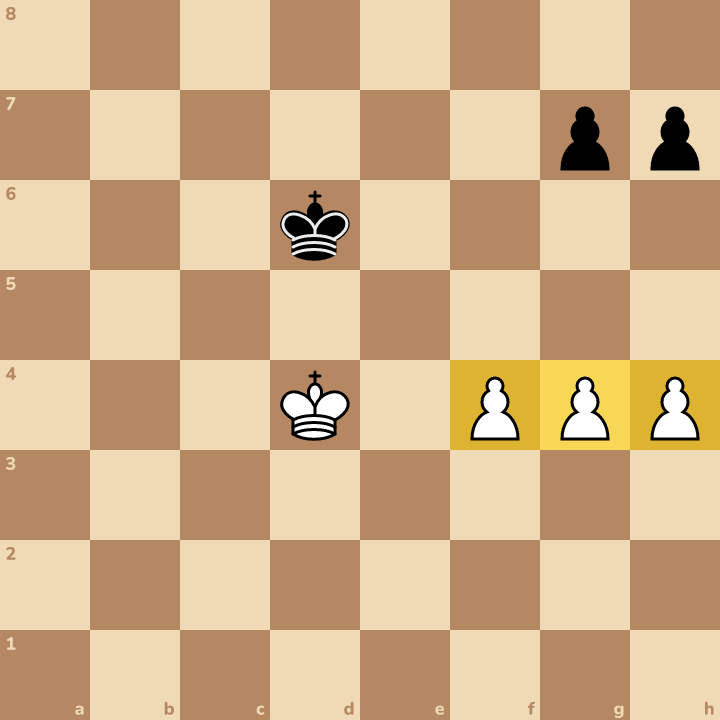
Here's a new position, from Capablanca. You have three pawns against two. None of yours is passed yet. How do you make one?
Push the pawn with no black pawn in front of it first. That's your f-pawn. It's the one that can become passed.
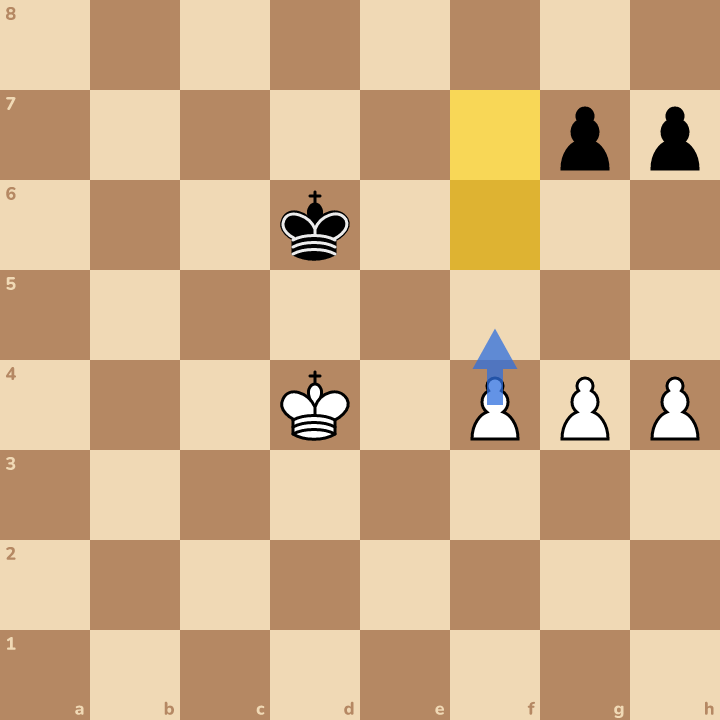
Try it 8. Push your f-pawn.
Show the answer
f5
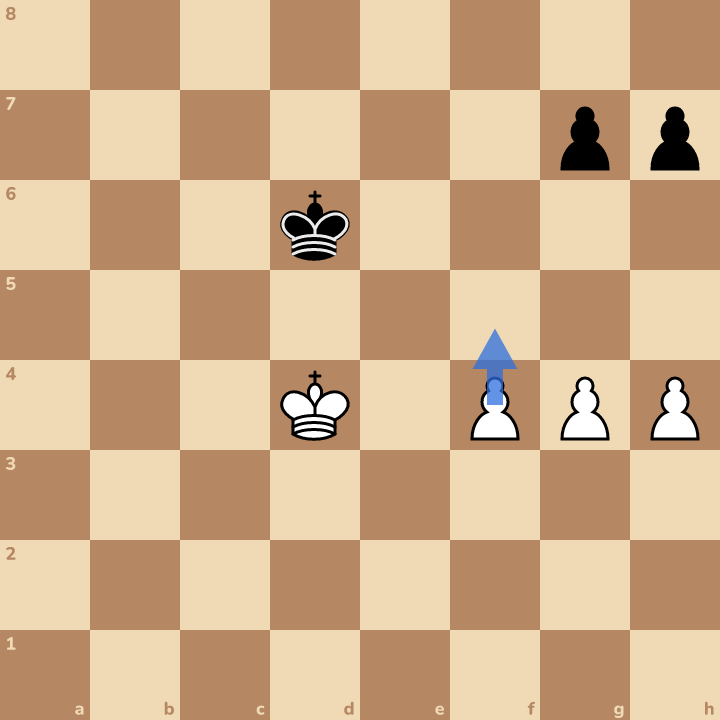
Try it 9. Black steps his king to e7. Now bring your king up to e5, next to your pawns.
Show the answer
Ke5
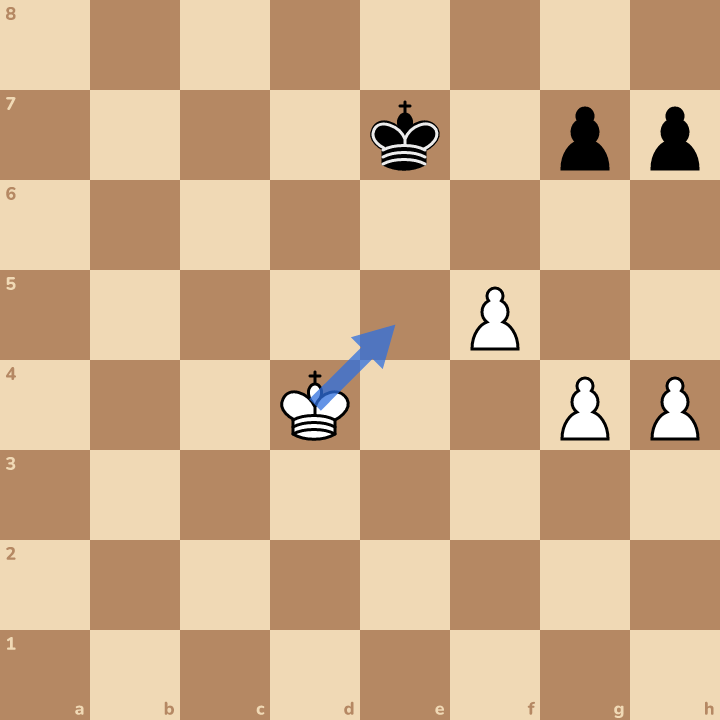
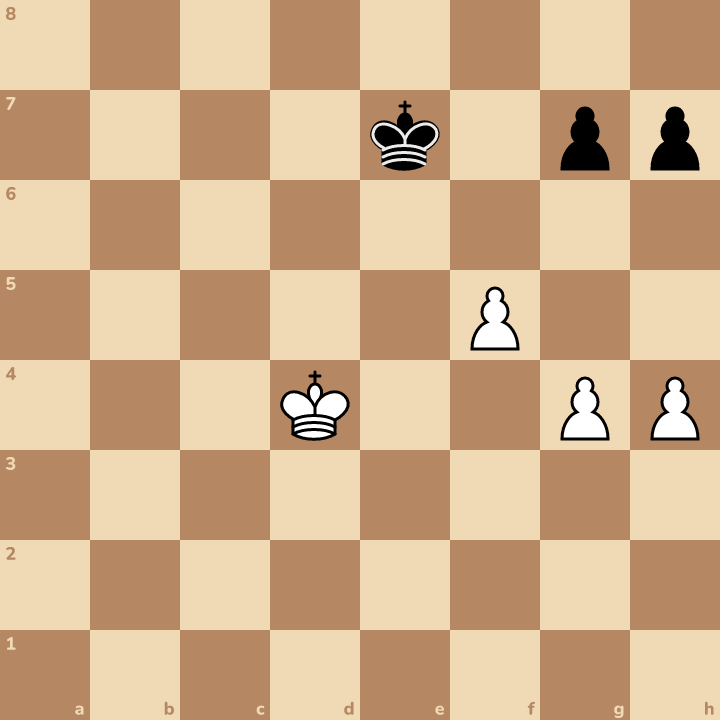
Try it 10. Now push your g-pawn, next to your f-pawn.
Show the answer
g5
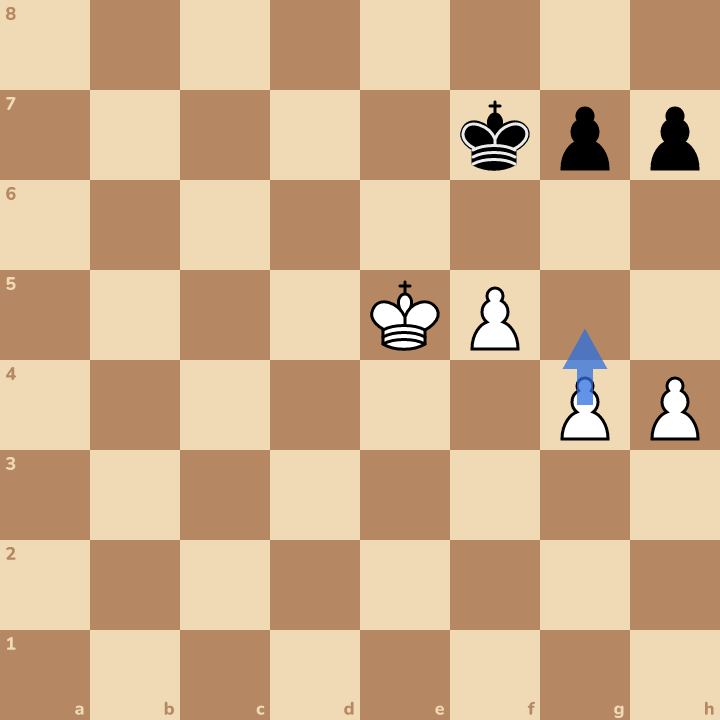
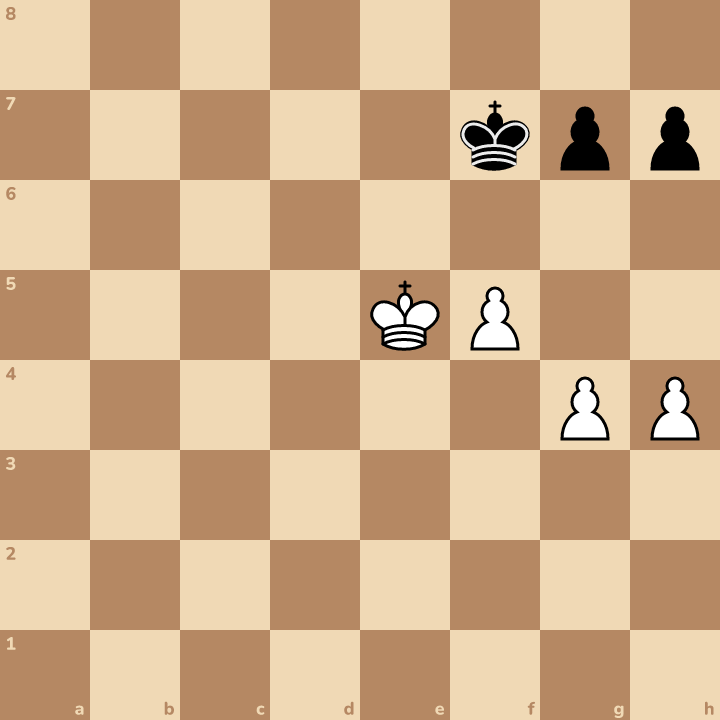
Your pawns walk up together. If a black pawn moves, one of yours can become passed. Let's see how.
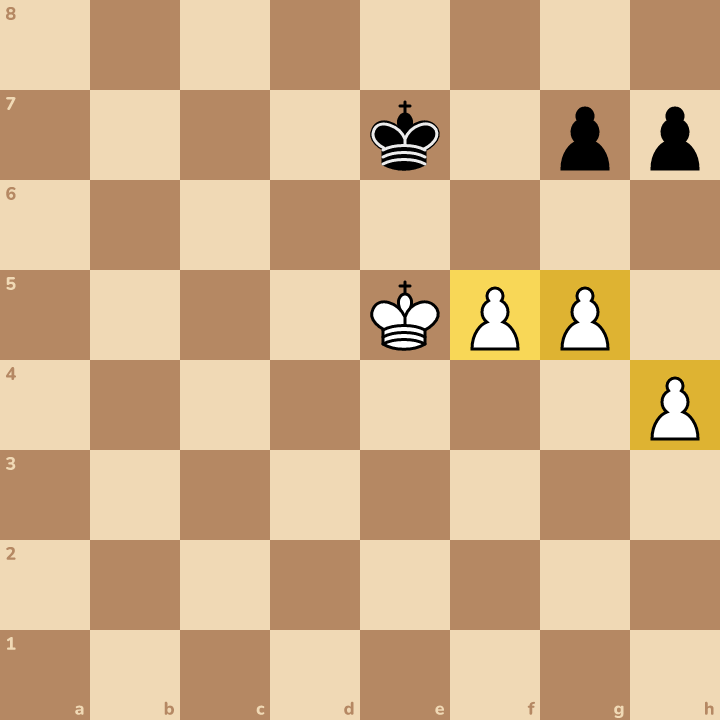
Try it 11. Here's a new position. Go back a move. What if Black had pushed g6? Push your f-pawn again, with check. Then it's a passed pawn!
Show the answer
f6+
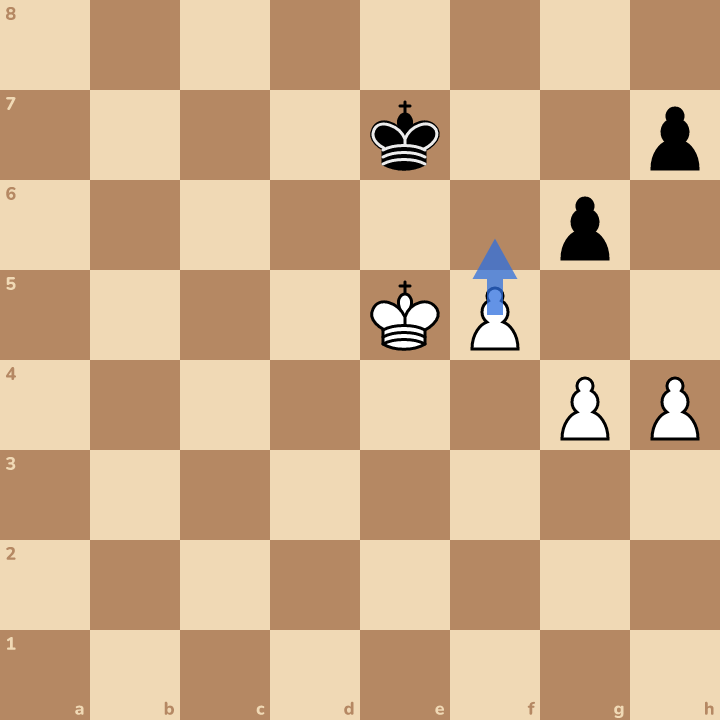
No black pawn is in front of it now, or on the columns next to it, ahead of it. Your king guards it.
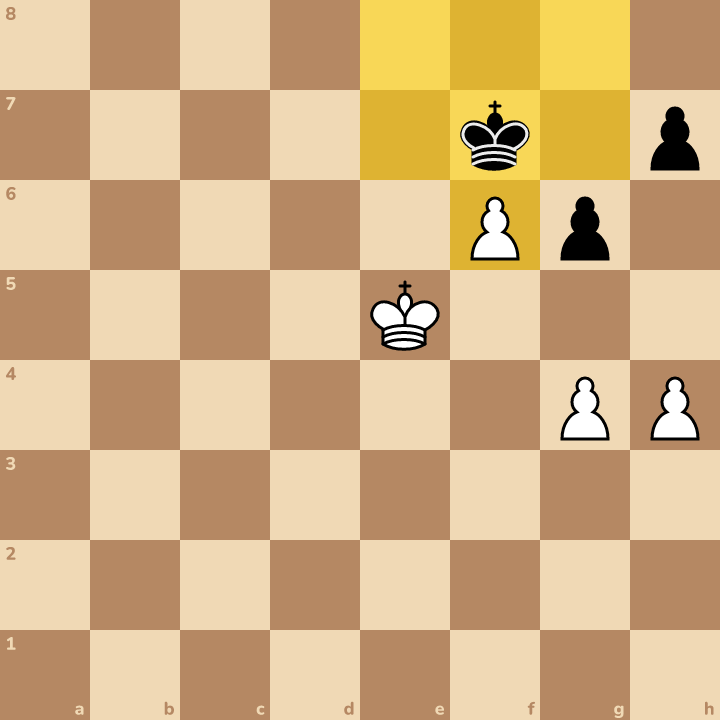
Try it 12. Now guard your passed pawn with another pawn. Push your g-pawn.
Show the answer
g5
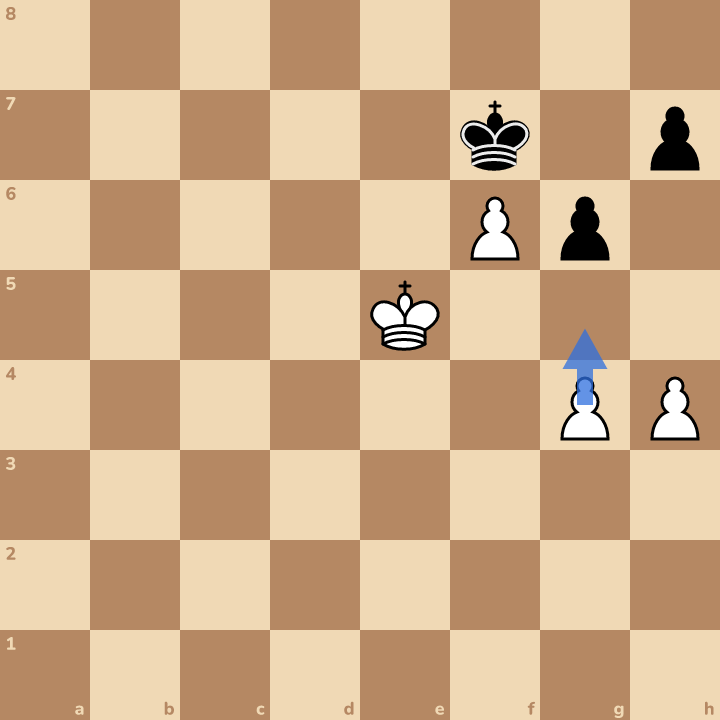
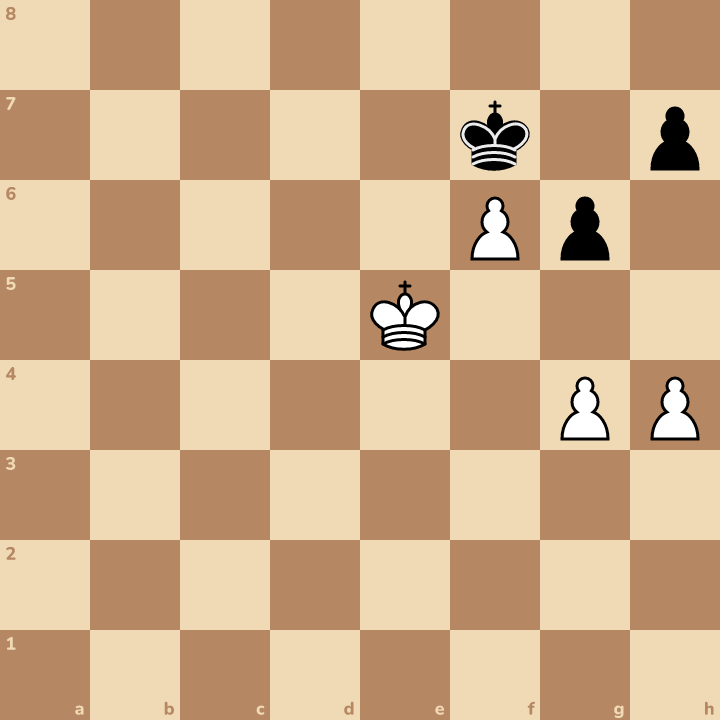
Now a pawn guards your passed pawn, so his king can't take it. A guarded passed pawn is a big help.
Next: The faraway passed pawn
Learn with the whole family
This lesson comes from My Chess Family, a chess app where children learn and play with their family and friends: no chat, no ads and no strangers. Why it's safe for kids.